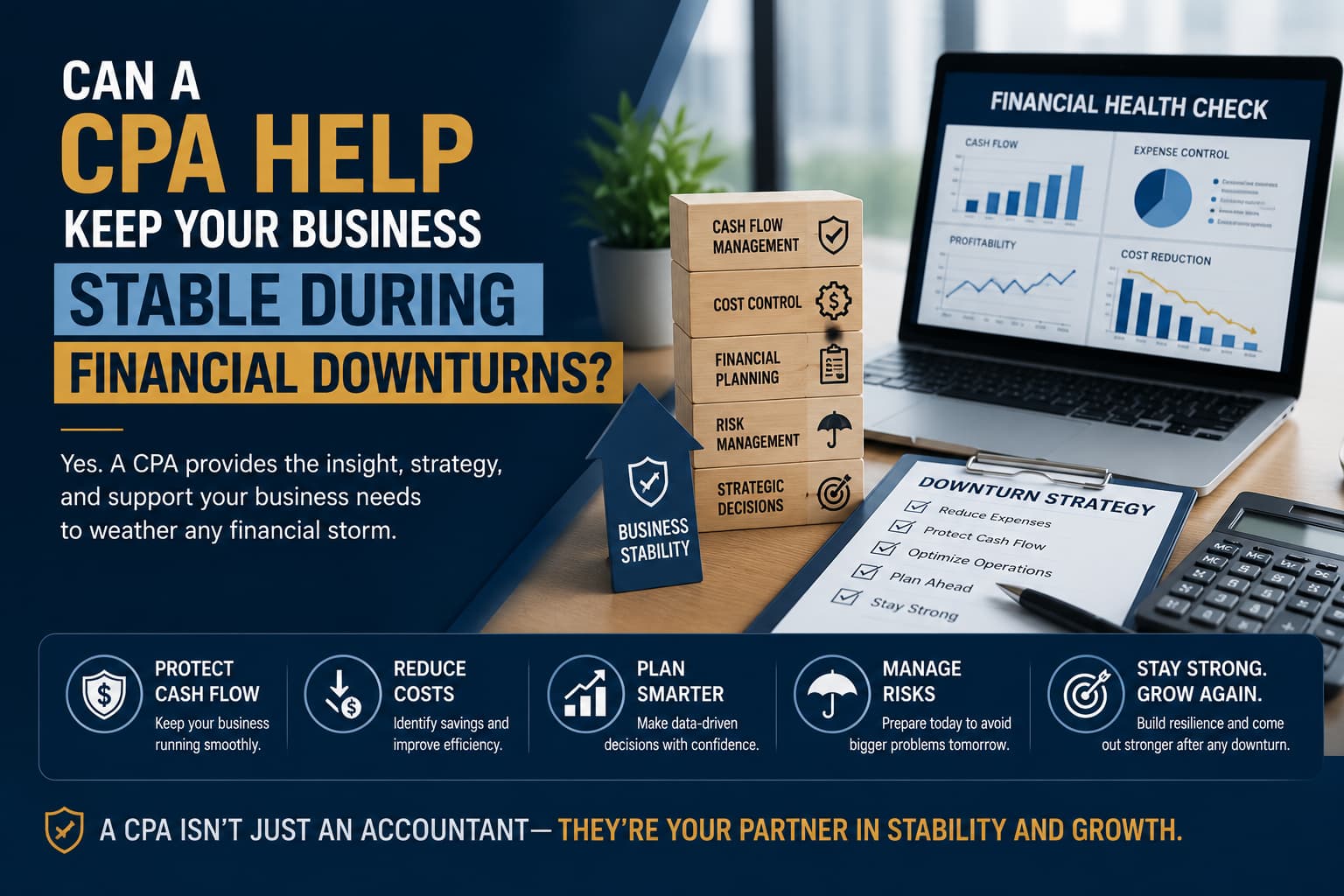
Yes, a CPA can help keep your business stable during financial downturns by improving cash flow management, reducing unnecessary expenses, and creating better financial plans. They help businesses stay organized, manage taxes correctly, and make smarter decisions during uncertain economic conditions.
A CPA also helps identify financial risks early, improve budgeting, and maintain accurate records. This support reduces financial stress, protects business operations, and helps companies remain stable even when sales slow or costs rise. At Reckenen, this approach helps businesses stay financially strong even in challenging times.
Why Financial Stability Matters During Economic Downturns
A business can grow for years and still struggle during a financial downturn. Rising costs, lower sales, delayed payments, and weak cash flow can quickly create serious problems. Many businesses fail not because they stop selling, but because they cannot manage money properly during difficult times.
This is where a CPA becomes important. A CPA helps businesses stay financially organized, reduce risk, and make smarter decisions during uncertain periods. With proper planning and financial guidance, companies can stay stable even when the economy becomes unpredictable, while a strong business tax CPA ensures tax efficiency and better financial control.
What Causes Financial Instability in Businesses?
Financial instability usually starts with poor money management. During economic slowdowns, customers often spend less, which reduces business income. At the same time, expenses like rent, payroll, and supplier costs continue to increase.
Cash flow problems are another major issue. Many businesses struggle because payments come in late while bills must still be paid on time. Without budgeting and forecasting, businesses often react too late to financial pressure.
Weak planning also creates problems. Businesses that do not prepare for emergencies usually face more stress during downturns. Instead of planning, they make rushed decisions that can hurt long-term growth.
How a CPA Helps Businesses During Financial Downturns
1. Financial Analysis and Reporting
A CPA carefully reviews business finances to identify strengths and weaknesses. They analyze income, expenses, profits, and losses to help owners understand where money is being spent. A strong business tax CPA helps businesses catch financial issues early.
For example, if a company’s expenses are rising faster than revenue, a CPA can identify the problem early and recommend solutions before the situation becomes serious.
2. Cash Flow Management
Cash flow is one of the biggest challenges during financial downturns. Even profitable businesses can struggle if cash is not managed properly.
A CPA helps track incoming and outgoing money, organize payments, and improve financial control. This reduces the risk of missed payments, debt buildup, and cash shortages.
3. Budgeting and Forecasting
Many businesses fail because they do not plan. CPAs create realistic budgets and financial forecasts that help businesses prepare for future challenges.
Forecasting allows businesses to estimate future income, expenses, and risks. This helps owners make careful decisions instead of reacting emotionally during difficult periods. A business plan CPA also helps structure long-term financial planning.
4. Expense Reduction Strategies
Cutting costs without damaging the business is very important during economic uncertainty. A CPA helps identify unnecessary spending and improve operational efficiency.
For example, a business may discover it is overspending on subscriptions, inventory, or supplier contracts. Reducing these expenses improves profit margins and financial stability.
5. Tax Planning and Compliance
Taxes become even more stressful during financial downturns. Filing mistakes or missing deadlines can create penalties that make financial problems worse.
A CPA ensures taxes are filed correctly and on time. They also identify legal tax-saving opportunities that help businesses reduce financial pressure while remaining compliant with tax laws.
Importance of Accurate Bookkeeping During Economic Uncertainty
Accurate bookkeeping helps businesses understand their real financial position. Without clear records, owners cannot make informed decisions during difficult times.
Good bookkeeping tracks sales, expenses, profits, and debts properly. It also prevents confusion during audits or tax filing. When financial records are organized, businesses can react faster and solve problems more effectively.
For example, a business with updated records can quickly identify falling profits and adjust spending before losses become severe.
How CPAs Improve Business Decision-Making
They help business owners make smarter, data-based financial decisions by analyzing profits, risks, and overall business performance.
Profitability Analysis
Not every product or service generates equal profit. A CPA helps businesses identify which areas are performing well and which are losing money.
This allows business owners to focus on stronger revenue sources and improve overall performance.
Risk Management
Every business faces financial risks, especially during uncertain economic periods. A CPA helps identify risks early and create strategies to reduce them.
This may include improving emergency savings, reducing debt, or restructuring expenses to improve stability.
Strategic Planning
Long-term planning becomes even more important during downturns. CPAs help businesses create financial strategies that support future growth without creating unnecessary risk.
Instead of making short-term decisions based on panic, businesses can follow a structured financial plan.
Common Financial Mistakes Businesses
Many businesses create bigger problems by making avoidable mistakes during difficult times. Common financial mistakes include:
- Ignoring cash flow problems
- Delaying financial reporting
- Missing tax deadlines
- Making poor budgeting decisions
- Cutting important investments too quickly
- Failing to seek professional financial advice early
These mistakes often increase stress and reduce long-term stability. Early financial planning helps businesses avoid these problems.
CPA Support for Small Businesses
Small businesses are often hit harder during financial downturns because they usually have fewer financial resources. Even a short drop in sales can create major problems. A CPA helps small businesses manage spending, improve budgeting, and control cash flow. They also provide guidance on tax planning, loans, and financial reporting.
A CPA helps small businesses manage spending, improve budgeting, and control cash flow. For example, understanding the average cost of a CPA for a small business helps owners plan professional support without overspending.
Benefits of Financial Support in Tough Times
Working with a CPA offers several important benefits during periods of economic uncertainty.
- Better financial organization
- Improved budgeting and forecasting
- Reduced financial risk
- Accurate tax compliance
- Stronger cash flow management
- Better business decision-making
- More confidence during uncertain periods
A CPA not only helps businesses survive downturns but also prepares them for future opportunities. The cost of a CPA for a small business is often much lower than the losses caused by poor financial decisions.
Signs Your Business May Need CPA Support
Many business owners wait too long before asking for financial help. Some common signs that a business may need CPA support include:
- Ongoing cash flow problems
- Difficulty managing expenses
- Falling profit margins
- Tax filing stress or penalties
- Lack of financial planning
- Rapid business growth without a financial structure
In such cases, many businesses also look for a cpa firm business plan to build stronger financial systems.
CPA vs DIY Financial Management
Some business owners try to manage finances alone to save money. While this may work for very small operations, it becomes risky as businesses grow or face financial pressure.
Some businesses even explore options like a CPA business for sale, but professional guidance is usually more valuable than shortcuts.
Long-Term Financial Stability Strategies
Strong businesses focus on long-term financial health, not just short-term survival. Important stability strategies include:
- Maintaining emergency business funds
- Reviewing financial reports regularly
- Reducing unnecessary debt
- Monitoring expenses carefully
- Using financial forecasting tools
- Working with financial professionals consistently
Businesses that plan are usually more stable during economic downturns.
FAQs
Are CPAs recession-proof?
CPAs are not fully recession-proof, but demand for their services usually stays strong because businesses still need help with taxes, cash flow, and financial planning during tough times.
How much does a CPA charge?
CPA costs vary based on services and complexity. Simple tax work is usually lower, while business accounting and advisory services cost more.What are the disadvantages of CPA services?
The main disadvantages are higher cost compared to basic accounting tools and possible delays if services are in high demand during tax season.What can a CPA do that an accountant cannot?
A CPA can represent clients before tax authorities, provide advanced tax planning, and offer certified financial advisory services that go beyond basic accounting work.When should a business hire a CPA?
A business should hire a CPA when finances become complex, taxes increase, or when expert help is needed for growth, planning, or financial stability.
Building Stability Through Smart Financial Planning
Financial downturns can pressure any business, but strong planning changes everything. A CPA helps improve cash flow, reduce risks, manage taxes, and support smarter decisions. With expert guidance, businesses stay stable, prepared, and ready for future growth even in tough times.
Strengthen your business stability today with expert financial guidance from Reckenen.