
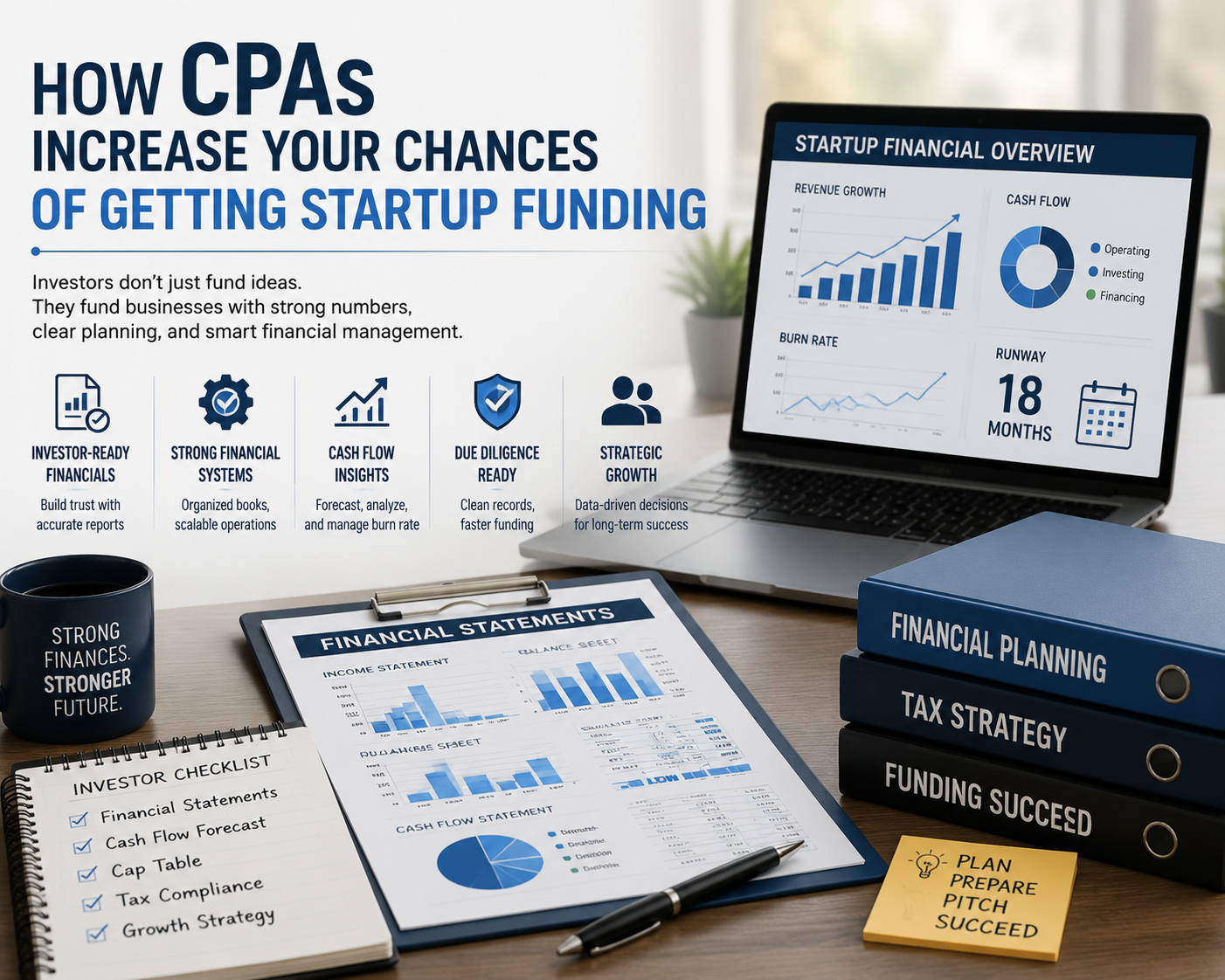
Getting startup funding is harder than many founders expect. Investors do not invest in ideas alone. They invest in businesses that show financial stability, clear planning, and long-term growth potential. Many startups fail to secure funding because their financial records are incomplete, confusing, or unrealistic. This is why working with a CPA for startups can make a major difference.
Whether you are launching a tech company or exploring how to grow a financial business like a CPA firm or technology company, proper financial planning is critical for success. At Reckenen CPA, we help businesses create strong financial systems that support growth and smarter financial decisions.
Understanding the Growth of CPA Firms
The startup industry has also created new opportunities for accounting professionals. Many accountants now explore topics like the following:
- How to start a CPA business
- How to start a CPA firm
- Starting your own CPA firm
Modern CPA firms increasingly focus on startup advisory, outsourced accounting, and technology-based financial services. As startups grow more financially complex, the demand for specialised CPA support continues to increase across industries.
Why Investors Care About Financial Readiness
Investors review hundreds of startup pitches every year. Most founders focus heavily on the product, but investors often focus more on the numbers behind the business. They want to understand:
- How the startup earns money
- How fast does it spend money
- Whether revenue growth is realistic
- How long can the company survive without new funding
If financial information is unclear, investors may see the business as risky. For example, a startup may show strong sales growth but fail to explain rising expenses or poor cash flow management. This creates doubt, even if the product is promising.
How CPAs Help Startups Prepare for Funding
A CPA helps startups build a strong financial foundation before meeting investors. This preparation improves credibility and reduces mistakes during fundraising.
1. Investor-Ready Financial Statements
One of the biggest responsibilities of a CPA is preparing financial statements that investors can easily review. These reports usually include profit and loss statements, balance sheets, and cash flow statements. Investors use them to evaluate business performance and financial health.
For example, a clean cash flow statement helps investors understand whether the startup can manage daily operations while growing. If reports are inaccurate or incomplete, investors may question the founder’s ability to manage money properly. A CPA also ensures that financial records follow accounting standards and remain consistent over time.
2. Strong Financial Systems & Accounting Setup
A CPA helps startups set up accounting software, organise expense tracking, build payroll systems, and create monthly reporting processes. These systems make financial management easier as the company scales.
This is especially important for technology startups that manage rapid growth. Many founders searching for the best outsourced CPA for startup support choose experienced CPA firms because they need scalable financial systems without hiring a full in-house finance team. Outsourced CPA support helps startups save time while maintaining accurate records.
3. Cash Flow Forecasting & Burn Rate Analysis
Cash flow is one of the most important factors investors review before funding a startup. A CPA helps founders create realistic forecasts that show expected revenue growth, monthly operating costs, burn rate, and financial runway. The burn rate shows how quickly a startup spends money each month, while runway estimates how long the startup can continue operating before needing additional funding.
For example, if a company has enough cash to operate for only six months, investors may expect to see a stronger growth and funding strategy before investing.
The CPA’s Role During Fundraising
Fundraising involves much more than presenting a pitch deck. Investors usually perform detailed financial reviews before making final decisions. A CPA helps startups prepare for this process by organising financial records and reducing compliance risks.
Due Diligence Preparation
During due diligence, investors carefully examine a company’s financial health. Missing records or inconsistent data can delay funding or damage investor trust. A CPA helps organize tax filings, revenue reports, payroll records, expense documentation, and financial statements in a clear and structured way.
Well-organized records make the startup appear more professional and investment-ready. For example, if investors request financial reports from previous years, startups with strong accounting systems can respond quickly without confusion or delays. This level of preparation helps build confidence during the funding process.
Cap Table Management
Cap tables track ownership percentages, equity distribution, and investor shares. As startups grow, managing ownership structures becomes more complex and even small mistakes can create major issues later. A CPA helps founders avoid errors in equity calculations, stock option tracking, and dilution management.
Accurate cap table management ensures investors clearly understand ownership before investing. It also helps prevent future disputes and keeps the financial structure transparent and reliable.
409A Valuation Support
Many startups offer stock options to employees, and in such cases, a 409A valuation is often required to determine the fair market value of shares. This valuation plays an important role in compliance and employee equity planning.
A CPA helps startups prepare valuation data, maintain compliance with regulations, reduce tax risks, and support accurate equity pricing. This process builds stronger investor trust because it shows that the startup follows proper financial practices and values transparency.
Strategic Financial Planning for Startup Growth
Securing funding is only one part of building a successful startup. Investors also want to see how founders plan to manage and grow the business after receiving investment.
A CPA helps startups create long-term financial strategies through budgeting, forecasting, and KPI tracking.
Important startup metrics include:
- Customer Acquisition Cost (CAC)
- Customer Lifetime Value (LTV)
- Revenue growth rate
- Gross profit margins
Tracking these numbers helps founders make smarter business decisions.
For example, if customer acquisition costs continue rising while revenue stays flat, a CPA can help identify areas where spending should be reduced or adjusted. This type of financial planning supports sustainable growth instead of short-term expansion.
Common Financial Mistakes Startups Make
Many startups wait too long before hiring professional financial support. This often creates problems during fundraising. Some of the most common mistakes include:
- Disorganized bookkeeping
- Incorrect tax filings
- Unrealistic revenue projections
- Poor cash flow management
- Mixing personal and business expenses
These issues can reduce investor confidence and slow down funding opportunities. Working with a qualified CPA for startups helps founders avoid these costly mistakes early.
FAQs
What is the 80/20 rule for startups?
The 80/20 rule means 80% of results come from 20% of efforts. Startups should focus on the most important customers, features, and tasks that bring the highest growth and revenue.
How to increase the chances of a start-up succeeding?
A startup can improve success chances by having a clear business plan, strong financial management, understanding customer needs, and tracking cash flow properly. Good financial planning is key for long-term growth.
What is the 50-100-500 rule for startups?
It is a simple budgeting rule used by some startups to manage early-stage costs and milestones. It helps founders control spending and plan growth in phases based on available capital.
Can a CPA help me start a business?
Yes, a CPA can help set up accounting systems, manage taxes, create financial plans, and ensure compliance. This makes it easier for new businesses to stay organized from the beginning.
Why do startups need financial planning early?
Startups need financial planning early to avoid cash flow problems, track expenses, and make better decisions. It also helps attract investors by showing a clear financial strategy.
Funding Starts With Strong Finances
Getting startup funding requires more than a strong idea. Investors want businesses with organised financial systems, realistic planning, and accurate reporting. A CPA helps startups prepare investor-ready financial statements, improve cash flow management, organise due diligence documents, and build long-term financial strategies. Working with a trusted CPA for startups not only improves investor confidence but also helps founders avoid financial mistakes that can hurt future growth.
Partner with Reckenen CPA to build investor-ready financial systems and grow your startup with confidence.