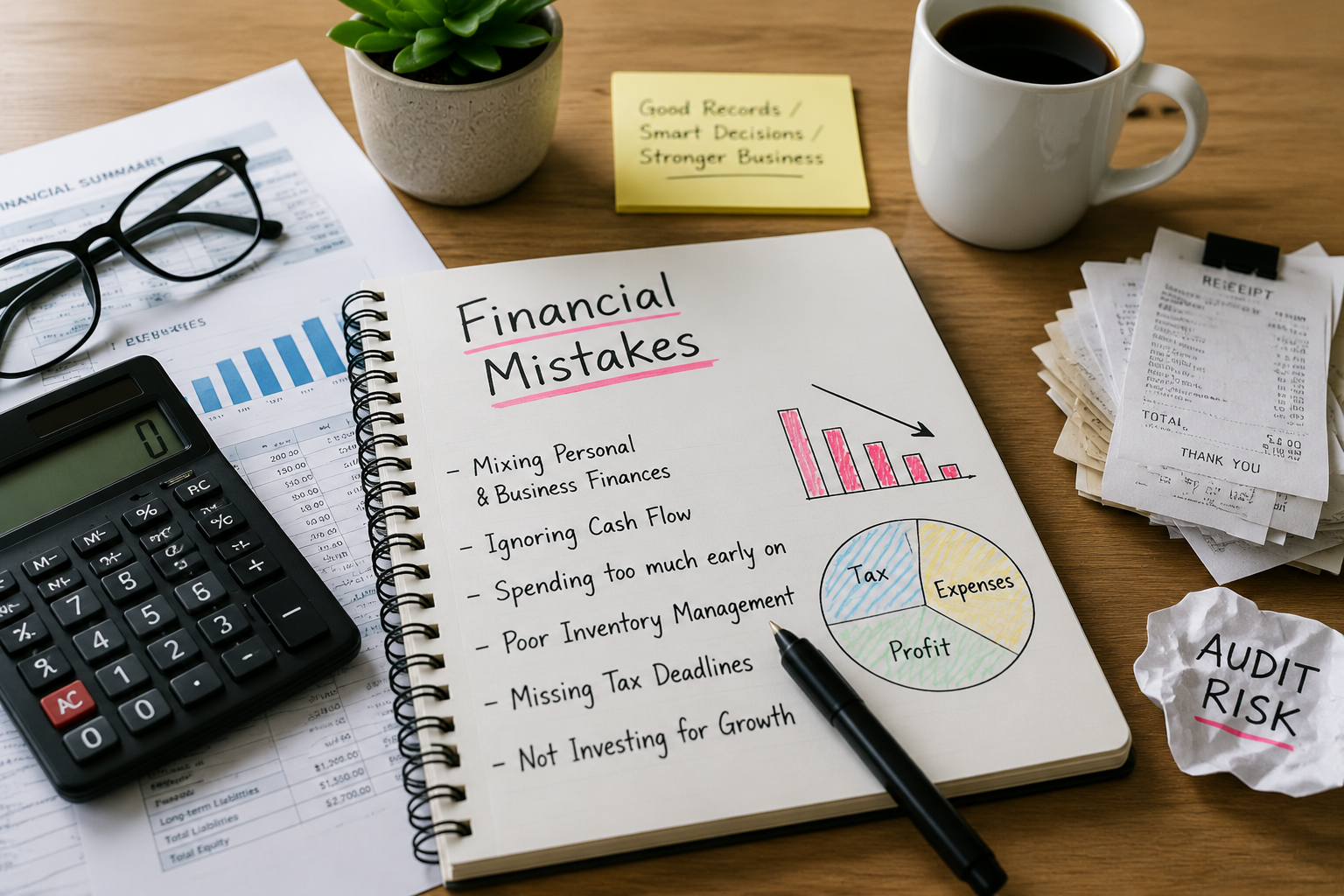
Financial records do more than track income and expenses. They support tax filings, document business activity, and help businesses stay compliant with tax regulations. Poor accounting increases audit risk because inaccurate records can lead to reporting inconsistencies, missing documentation, incorrect deductions, and tax filing errors. As a result, businesses may face greater scrutiny and spend valuable time correcting avoidable mistakes.
Many small business owners manage their own bookkeeping to save time and money. However, accounting errors often build up over time and create financial reporting issues that can increase audit risk. At Reckenen CPA, we help businesses maintain accurate accounting records, strengthen financial controls, and improve tax compliance through professional bookkeeping, accounting, and advisory services. Understanding how poor accounting affects audit risk is the first step toward protecting your business and avoiding costly problems.
Why Accurate Accounting Matters
Accurate accounting creates a reliable financial foundation for every business decision.
When records are properly maintained, business owners can:
- Track income and expenses accurately
- Monitor cash flow effectively
- Prepare reliable financial statements
- Support tax filings with proper documentation
- Identify financial trends and risks
- Make informed business decisions
Without accurate accounting, financial reports may become unreliable, making it difficult to understand the true financial position of the business.
How Poor Accounting Can Increase Audit Risk
Several accounting issues can increase the likelihood of financial reporting problems and tax scrutiny.
Inaccurate Income Reporting
Income reporting errors are among the most common accounting mistakes. Revenue may be omitted, recorded twice, or posted to the wrong accounting period. As a result, tax returns may not accurately reflect actual business activity. When reported income does not align with supporting records such as invoices, bank deposits, or payment processor reports, compliance concerns can arise. Accurate income tracking is essential for reliable financial reporting and tax compliance.
Missing Supporting Documentation
Businesses should maintain documentation for every financial transaction. Invoices, receipts, payroll records, contracts, bank statements, and expense reports help verify financial activity and support reported figures. However, when supporting documentation is incomplete or missing, businesses may struggle to justify deductions or explain transactions during a review. Organized recordkeeping strengthens financial accuracy and provides a clear audit trail.
Improper Expense Classification
Not every expense belongs in the same category. When transactions are classified incorrectly, financial statements may become misleading. For example, recording capital purchases as operating expenses or categorizing personal expenses as business costs can distort profitability and affect tax reporting. Proper expense classification helps businesses maintain accurate records and better understand their financial performance.
Unreconciled Bank Accounts
Bank reconciliations help ensure accounting records match actual financial activity. When reconciliations are skipped or delayed, discrepancies can remain undetected for months. Missing transactions, duplicate entries, unrecorded fees, and posting errors may continue affecting financial reports without being noticed. Regular reconciliations improve accuracy and help identify potential issues before they become larger problems.
Excessive Manual Data Entry Errors
Manual bookkeeping increases the likelihood of human error. Transactions may be entered incorrectly, duplicated, or omitted entirely. Even small mistakes can affect account balances, financial statements, and tax reporting. As transaction volume grows, the impact of these errors can become more significant. Businesses that rely heavily on manual processes should implement review procedures to maintain accuracy.
Payroll Reporting Mistakes
Payroll compliance involves much more than paying employees on time. Businesses must properly calculate wages, tax withholdings, benefits, overtime, payroll taxes, and reporting obligations. Errors in payroll records can create compliance issues, financial penalties, and reporting inconsistencies. Maintaining accurate payroll records helps businesses meet regulatory requirements and reduce risk.
Incorrect Deduction Claims
Many business owners unintentionally claim deductions that are not properly documented or do not qualify under tax regulations. While deductions can reduce tax liability, unsupported claims may create complications if additional documentation is requested.
Reviewing deductions regularly and maintaining supporting records helps strengthen compliance and reduce potential reporting concerns.
Mixing Personal and Business Expenses
One of the most common bookkeeping mistakes among small business owners is mixing personal and business finances. Using business accounts for personal purchases or paying business expenses from personal accounts can make financial records difficult to track and verify.
In addition, this practice can distort profitability, complicate tax reporting, and increase the time required to prepare accurate financial statements. Maintaining separate accounts helps create cleaner records and improves financial transparency.
Failure to Maintain Consistent Financial Records
Consistency plays an important role in accurate accounting. When bookkeeping practices change frequently, or transactions are recorded differently from month to month, financial reports become less reliable. Inconsistent recordkeeping can create confusion, make trend analysis more difficult, and increase the likelihood of reporting errors. Standardized accounting procedures help ensure financial information remains accurate and comparable over time.
Ignoring Financial Statement Reviews
Financial reports provide valuable insights into business performance, but many business owners review them only during tax season. Without regular reviews, unusual transactions, account discrepancies, and reporting errors may go unnoticed. Monthly financial statement reviews allow businesses to identify issues early, monitor trends, and make informed financial decisions before small problems become larger concerns.
Poor Record Retention Practices
Accurate accounting depends on maintaining organized financial records. Businesses should retain invoices, receipts, payroll documents, contracts, tax filings, and other supporting records in a secure and accessible format.
Poor record retention can make it difficult to verify transactions, support deductions, or respond to financial questions. Strong documentation practices improve financial reliability and support long-term compliance.
Delayed Bookkeeping Updates
Many businesses postpone bookkeeping tasks until the end of the month, quarter, or even year. However, delayed recordkeeping often increases the risk of forgotten transactions, missing documentation, and reporting inaccuracies.
Keeping financial records updated regularly provides a more accurate picture of business performance and allows owners to address issues before they affect financial reporting.
Weak Internal Controls
Internal controls are processes designed to reduce errors and improve financial oversight. Examples include approval procedures, transaction reviews, segregation of duties, and regular account monitoring.
Businesses with weak internal controls may be more vulnerable to accounting mistakes, unauthorized transactions, and inaccurate reporting. Strong financial controls help improve accountability and strengthen the reliability of financial information.
Failure to Track Assets and Liabilities Properly
Businesses often focus on income and expenses while overlooking asset and liability accounts. Loans, equipment purchases, credit card balances, and long-term obligations must be tracked accurately to maintain complete financial records.
Errors in these accounts can affect balance sheets, distort financial reports, and create reporting inconsistencies. Regular account reviews help ensure financial statements accurately reflect the company’s position.
Overreliance on Accounting Software Without Review
Modern accounting software can automate many bookkeeping tasks and improve efficiency. However, software is only as accurate as the information entered into it. Automated systems cannot always identify incorrect classifications, duplicate transactions, or missing entries.
Businesses should review financial reports regularly and combine technology with professional oversight to ensure records remain accurate and reliable.
Common Accounting Red Flags
Certain accounting practices may indicate weaknesses in financial recordkeeping.
Common red flags include:
- Frequent bookkeeping adjustments
- Missing receipts or invoices
- Unreconciled bank accounts
- Large unexplained expenses
- Inconsistent income reporting
- Negative account balances
- Significant year-end corrections
- Delayed financial reporting
Identifying these issues early helps businesses improve financial accuracy before larger problems develop.
How a CPA Helps Reduce Audit Risk
A CPA provides more than tax preparation services.
Professional CPA support helps businesses:
- Maintain accurate accounting records
- Improve bookkeeping processes
- Reconcile financial accounts regularly
- Monitor compliance requirements
- Review tax positions proactively
- Strengthen financial controls
- Identify potential reporting issues early
As a result, businesses gain greater confidence in their financial reporting and reduce the likelihood of costly errors.
The Importance of Regular Financial Reviews
Accounting should not be treated as a once-a-year activity.
Regular financial reviews allow business owners to:
- Verify transaction accuracy
- Monitor financial performance
- Detect unusual activity
- Address discrepancies quickly
- Improve cash flow management
- Prepare for tax obligations throughout the year
Consistent oversight helps prevent small bookkeeping issues from becoming larger compliance concerns.
How Technology Supports Better Accounting
Modern accounting software helps businesses improve both accuracy and efficiency in their financial management processes. By automating transaction tracking, generating real-time financial reports, integrating directly with bank accounts, and maintaining organized financial records, technology reduces the risk of manual errors and saves valuable time.
In addition, business owners gain better visibility into cash flow, expenses, profitability, and overall financial performance, allowing them to make more informed decisions. Faster account reconciliations and improved record retention also help support compliance and financial accuracy. However, while technology is a valuable tool, it cannot replace professional financial oversight. Businesses still need accurate accounting processes, regular reviews, and expert guidance to ensure records remain reliable and compliant with tax and reporting requirements.
The Bottom Line
Poor accounting does more than create bookkeeping headaches. It can lead to reporting errors, compliance issues, inaccurate tax filings, and increased financial risk.
Fortunately, these problems are often preventable. By maintaining accurate records, performing regular reconciliations, preserving documentation, and working with a qualified CPA, businesses can strengthen financial controls and reduce the risk of costly mistakes.
Protect your business with accurate accounting and proactive financial guidance from Reckenen CPA.
FAQs:
Can accounting mistakes trigger an audit?
Accounting errors alone do not automatically trigger an audit. However, inaccurate reporting, missing documentation, and significant inconsistencies can increase compliance risks and lead to additional scrutiny.
How often should financial records be reviewed?
Most businesses should review financial records monthly. Regular reviews help identify errors early and improve reporting accuracy.
What records should businesses keep for tax purposes?
Businesses should retain invoices, receipts, bank statements, payroll records, tax filings, and other financial documents that support reported income and expenses.
Does accounting software eliminate audit risk?
No. Accounting software improves efficiency, but inaccurate data entry and poor financial processes can still create reporting issues.
When should a business hire a CPA?
Businesses should consider CPA support when financial transactions become more complex, growth accelerates, tax obligations increase, or additional financial oversight is needed.