Many business owners check only one number before making decisions: their bank balance. While your bank account tells you how much money is available today, it does not show whether your business is truly growing or facing financial problems.
Financial metrics give you a clear picture of your business’s health. They help you understand your income, expenses, profits, and cash flow so you can make smarter decisions every month. At Reckenen, we help businesses use accurate financial reporting to track these metrics regularly, making it easier to identify problems early, improve profitability, and plan for long-term growth instead of waiting until tax season.
What Are Financial Metrics?
Financial metrics are measurable numbers that show how a business is performing financially. They help track important areas such as revenue, expenses, profits, cash flow, and overall financial activity.
By reviewing these numbers regularly, business owners can better understand their company’s financial position and improve their company financial health through informed decision-making.
Why Monthly Financial Tracking Matters
Regular monitoring is one of the most effective ways to improve small business cash management and maintain financial stability.
Benefits include:
- Identify financial problems early
- Improve cash flow management
- Create more accurate budgets and forecasts
- Make tax preparation easier
- Make business decisions with confidence
For example, if your expenses suddenly increase in one month, you can investigate the cause immediately rather than discovering it several months later.
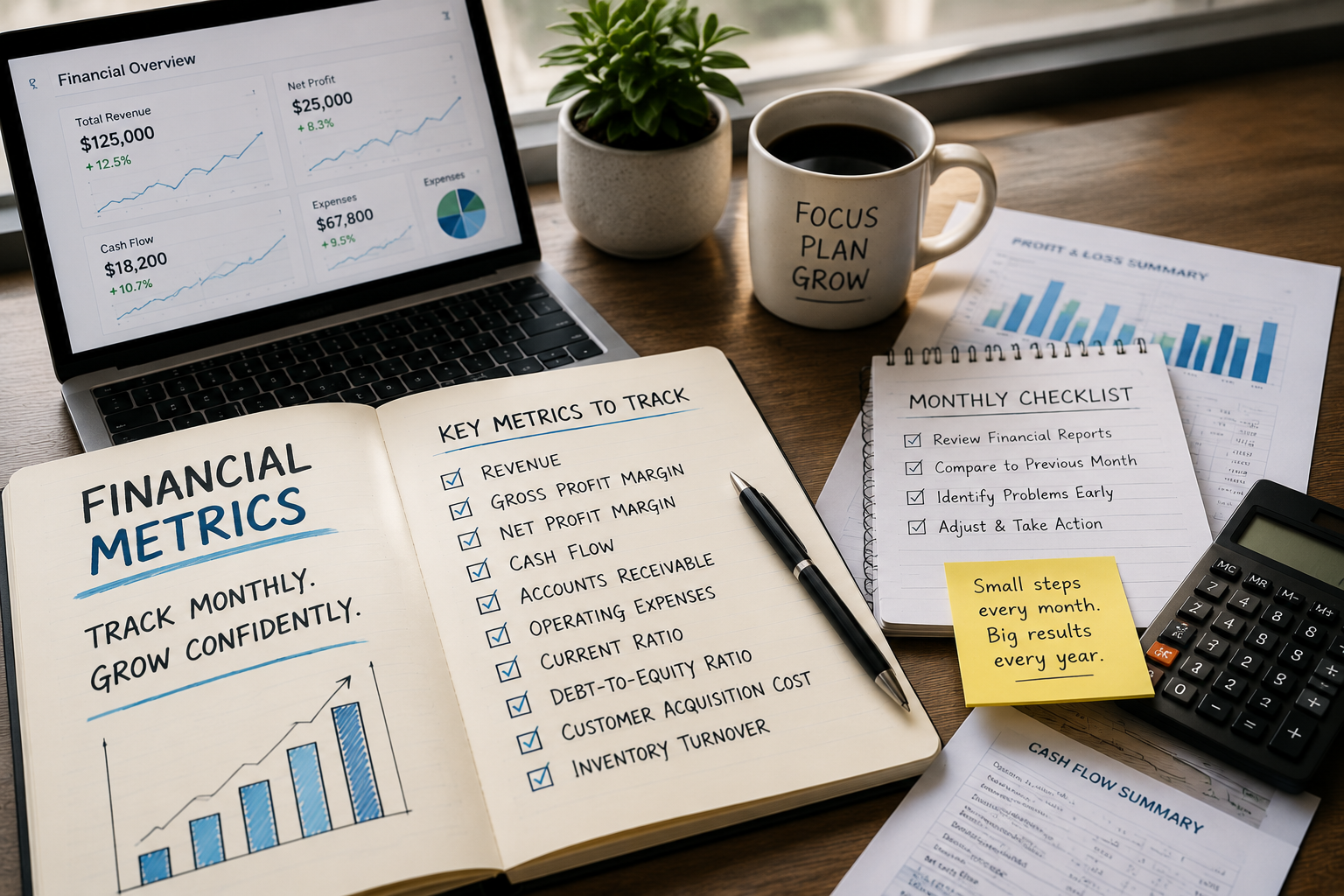
Financial Metrics Every Business Owner Should Track Monthly
Tracking financial metrics every month gives business owners a clear picture of their company’s performance.
1. Why Revenue Alone Isn’t Enough
Revenue is shown on your income statement and represents the total amount of money your business earns from sales.
Tracking your monthly revenue helps you compare performance with previous months, identify seasonal trends, measure steady business growth, and avoid relying on one-time sales spikes. A business that earns consistent monthly revenue is usually in a stronger position than one with unpredictable sales because it provides a more reliable foundation for planning and growth.
2. Track Your Gross Profit Margin
Tracking this metric also helps businesses calculate margin more accurately and make informed pricing decisions.
If production costs continue to rise while prices stay the same, your profit margin becomes smaller. Tracking this metric every month helps you determine whether you need to adjust pricing, negotiate better rates with suppliers, or reduce production costs. Even small improvements in your gross profit margin can significantly increase your overall profitability over time.
3. Monitor Your Net Profit Margin
Learning how to figure profit margin correctly helps business owners measure true profitability and identify areas for improvement.
Reviewing your net profit margin every month helps you measure overall profitability, control unnecessary expenses, and improve long-term financial performance. This metric provides a clear picture of whether your business is truly making money rather than simply generating revenue.
4. Monitor Your Monthly Cash Flow
Revenue is shown on your income statement and represents the total amount of money your business earns from sales.
Reviewing your operating cash flow every month helps ensure you always have enough money to pay employees, suppliers, rent, utilities, taxes, and other day-to-day expenses. Maintaining healthy cash flow keeps your business running smoothly and reduces the risk of unexpected financial challenges.
5. Track Accounts Receivable
Accounts receivable represent the money customers still owe your business. If invoices remain unpaid for too long, your cash flow can suffer even when sales are strong.
Monitoring outstanding invoices, average payment collection times, and overdue accounts each month helps improve your collection process. Tracking this metric also helps businesses calculate margin more accurately and make informed pricing decisions.
6. Monitor Operating Expenses
Learning how to figure profit margin correctly helps business owners measure true profitability and identify areas for improvement.
Reviewing your operating expenses each month helps you identify unnecessary spending, monitor rising costs, and find opportunities to save money. Comparing expenses month after month also makes it easier to spot unusual increases before they begin affecting your profitability.
7. Track Your Current Ratio
Effective cash management helps businesses pay expenses on time, avoid shortages, and support daily operations.
A healthy current ratio shows that your business can comfortably pay upcoming bills without creating unnecessary financial pressure. Banks, investors, and lenders often review this metric before approving financing because it reflects your company’s short-term financial stability.
8. Monitor Your Debt-to-Equity Ratio
Along with other financial performance indicators, the current ratio helps measure short-term financial strength.
Monitoring this ratio each month helps you maintain healthy borrowing levels, reduce financial risk, and make smarter investment decisions. Keeping debt at a balanced level supports sustainable business growth and improves long-term financial stability.
9. Track Customer Acquisition Cost (CAC)
Customer Acquisition Cost (CAC) measures how much it costs to gain one new customer. This includes your marketing expenses, advertising costs, and sales team expenses.
Comparing your customer acquisition cost with the value each customer brings to your business helps you evaluate the effectiveness of your marketing strategy. If acquiring new customers costs more than the revenue they generate, it may be time to improve your marketing efforts and increase efficiency.
10. Monitor Inventory Turnover
If your business sells products, inventory turnover is an important financial metric to track. It measures how quickly your inventory is sold and replaced over a specific period.
A healthy inventory turnover rate helps reduce storage costs, improve cash flow, prevent outdated inventory, and ensure popular products remain available for customers. Inventory that sits on shelves for too long ties up valuable cash and can reduce your overall profitability.
How Often Should You Review Financial Metrics?
Review your profit and loss statement and other financial reports every month to stay informed about business performance.
- Compare results with previous months
- Set realistic performance benchmarks
- Use accounting software or financial dashboards
- Review reports with your CPA or financial advisor
Regular reviews help you make timely decisions instead of reacting to problems after they become serious.
Common Mistakes Business Owners Make
Many businesses struggle because they focus on the wrong financial information. Common mistakes include:
- Only checking the bank balance
- Ignoring cash flow
- Tracking too many KPIs
- Waiting until year-end to review reports
- Not taking action after reviewing financial reports
Keeping your focus on a small group of meaningful financial metrics makes decision-making much easier.
How Professional Financial Reporting Supports Business Growth
Businesses can also use cost-profit-volume analysis to understand how changes in sales, costs, and pricing affect overall profitability.
Strong financial reporting also reduces risk and helps you prepare for the future. Whether you’re applying for financing, expanding your business, or adjusting to market changes, accurate financial reports give you the confidence to act quickly and make informed decisions.
FAQs
What are financial metrics?
Financial metrics are measures of your business’s financial performance, such as revenue, profit, cash flow, and expenses.
Why should businesses track financial metrics?
Tracking financial metrics helps you make informed decisions, improve profitability, and identify potential issues early.
Can accounting software track financial metrics?
Yes. Most accounting software automatically tracks key financial metrics and generates easy-to-read financial reports.
Do startups need to monitor financial metrics?
Yes. Tracking financial metrics from the beginning helps startups manage cash flow, control costs, and support healthy growth.
Who can help businesses understand financial metrics?
A CPA or financial advisor can help you interpret financial reports and use the data to make better business decisions.
Build a Stronger Business with Better Financial Insights
Tracking financial metrics every month gives you a clear understanding of how your business is performing. Instead of relying on your bank balance or instinct, you can use accurate financial data to improve cash flow, increase profitability, and plan for long-term success.
Start making smarter financial decisions with expert guidance from Reckenen today.