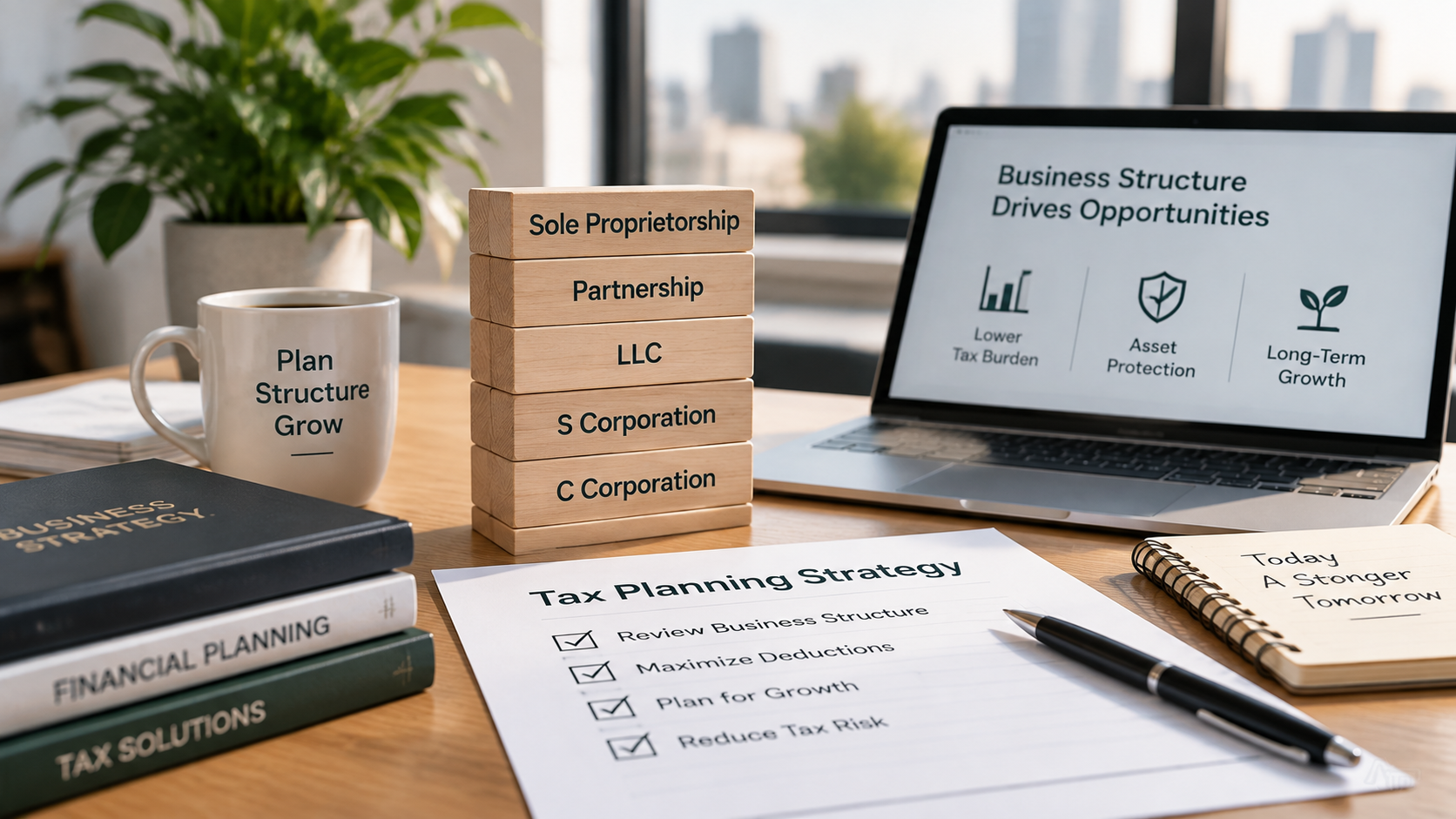
Your business structure isn’t just paperwork; it can directly affect your tax bill, your deductions, and how protected you are as your business grows. Many owners choose a structure once and never review it again, which may lead to missed savings or unnecessary risks. Aligning your structure with a smarter tax strategy can help you make better decisions for your business today and tomorrow.
At Reckenen, we look beyond the numbers to help business owners make tax and financial decisions with greater confidence. By considering your business structure alongside your tax goals, financial position, and plans for growth, we help create a strategy that supports your business today while preparing it for what comes next.
Why Structure Matters When Planning Your Taxes
Your business structure affects far more than how you file your taxes each year—it can shape how your income is taxed, including your federal income tax, which deductions may be available, and what reporting requirements you’re responsible for. A sole proprietorship, for example, is taxed differently than an S Corporation or an LLC, and each comes with its own rules around deductions, tax treatment, and compliance.
This is why tax planning shouldn’t only focus on the current year. As your business grows, your income increases, or your goals shift, the structure that once worked well may no longer be the best option for your taxes. Thinking ahead—not just reacting to this year’s tax bill—helps ensure your structure continues to support your business rather than hold it back.
A Closer Look at Common Business Structures
Choosing the right entity type starts with understanding how each business structure works. Here’s a quick breakdown of the most common structures and what they typically mean for your taxes.
Sole Proprietorship
The simplest structure, where the business and owner are closely connected for tax purposes. Income is generally reported on the owner’s personal tax return, making setup straightforward, but the owner is also personally responsible for business debts and liabilities.
Partnership
Owned by two or more people who share profits, losses, and tax responsibilities. Income generally passes through to each partner, who reports their share on their individual tax return based on the partnership agreement.
LLC (Limited Liability Company)
A flexible structure that combines liability protection with multiple tax treatment options. Depending on its tax classification, an LLC may be taxed as a sole proprietorship, partnership, or corporation.
S Corporation
This structure lets business income pass directly to the owners, who report it on their own tax returns instead of the business paying tax separately. This can offer tax benefits for qualifying businesses, but not every business is eligible, and you must follow specific rules.
C Corporation
A separate legal and tax entity from its owners. C Corporations generally pay corporate tax on profits, while shareholders may also pay tax on dividends, commonly known as double taxation. Businesses may also keep some profits as retained earnings to support future growth or investments.
Each structure carries its own tax implications, and the right choice depends on your income, growth plans, financial goals, and the level of liability protection you need.
Where Tax Benefits and Trade-Offs Come In
Every business structure comes with its own set of tax benefits—and trade-offs. Here’s what to weigh before deciding:
- Tax Advantages & Disadvantages — Each structure offers different tax rates, benefits, and limitations, so what saves money for one business may cost another more.
- Pass-Through Taxation — Structures like partnerships and most LLCs allow income to “pass through” to the owner’s personal tax return, generally avoiding a separate business-level income tax.
- Double Taxation — C Corporations pay tax on profits at the corporate level, and shareholders may pay tax again on dividends—an important factor to consider before choosing this structure.
- Owner Compensation — How you pay yourself (salary, distributions, or a mix) varies by structure and can affect your overall tax liability.
- Deductions & Compliance — Different structures may offer different deduction opportunities but can also come with specific reporting and compliance requirements, which may add time and cost.
The Bigger Picture: Tax Planning Beyond the Tax Bill
Tax savings matter, but they’re not the only thing your business structure affects. The right structure also helps protect your personal assets, support business growth, and build your company’s overall value over time. As your business evolves, these factors can matter just as much as your annual tax bill.
Your business structure can affect future decisions like adding partners, bringing in investors, or selling the business. Planning early helps protect your business value and enterprise value while supporting your long-term goals.
When Growth Calls for a Different Structure
As your business grows, the corporate structure that worked in the beginning may no longer be the right fit. Rising income, a bigger operation, or added risks can all be signs that it’s time to reassess—what worked early on doesn’t always keep working as your business grows.
Changes like bringing on new owners, partners, or investors, or simply shifting business goals, are also strong indicators that your current structure may need to evolve. Revisiting your structure at the right time can help you manage potential tax burdens and keep your business positioned for continued growth.
Building a Structure That Supports Your Long-Term Goals
Choosing the right business structure isn’t a one-time decision—it’s part of building a strategy that grows with you. Before deciding, consider your current and future income, financial planning needs, how you plan to take money out of the business, your liability protection needs, and your long-term goals.
Matching your business structure with your tax strategy helps all your decisions work together instead of against each other. That’s why expert guidance matters when making these important business decisions.
FAQs:
1. How Does Business Structure Affect Your Taxes?
Your business structure affects how your income is taxed, which deductions may apply, and how you report your business income.
2. Which Business Structure Is Best for Tax Planning?
The best structure depends on your income, business goals, liability needs, and plans for future growth.
3. Can You Change Your Business Structure Later?
Yes, you can change your structure as your business grows or your financial and tax needs change.
4. What Is the Difference Between an S Corp and a C Corp?
An S Corp generally passes income through to its owners, while a C Corp pays corporate tax and may face double taxation on dividends.
5. Why Should You Review Your Business Structure?
Regular reviews can help ensure your structure still fits your tax strategy, business goals, and long-term growth plans.
Let Your Structure Work For You, Not Against You
Your business structure does more than handle your paperwork; it shapes your taxes, protects your assets, and sets the stage for how your business grows. From choosing the right entity to knowing when it’s time to change, every decision plays a role in your bigger tax strategy. The right structure can help your business stay on track today while supporting its goals for the future.
Ready to build a smarter tax strategy? Let Reckenen help you choose a structure that supports your business goals.