
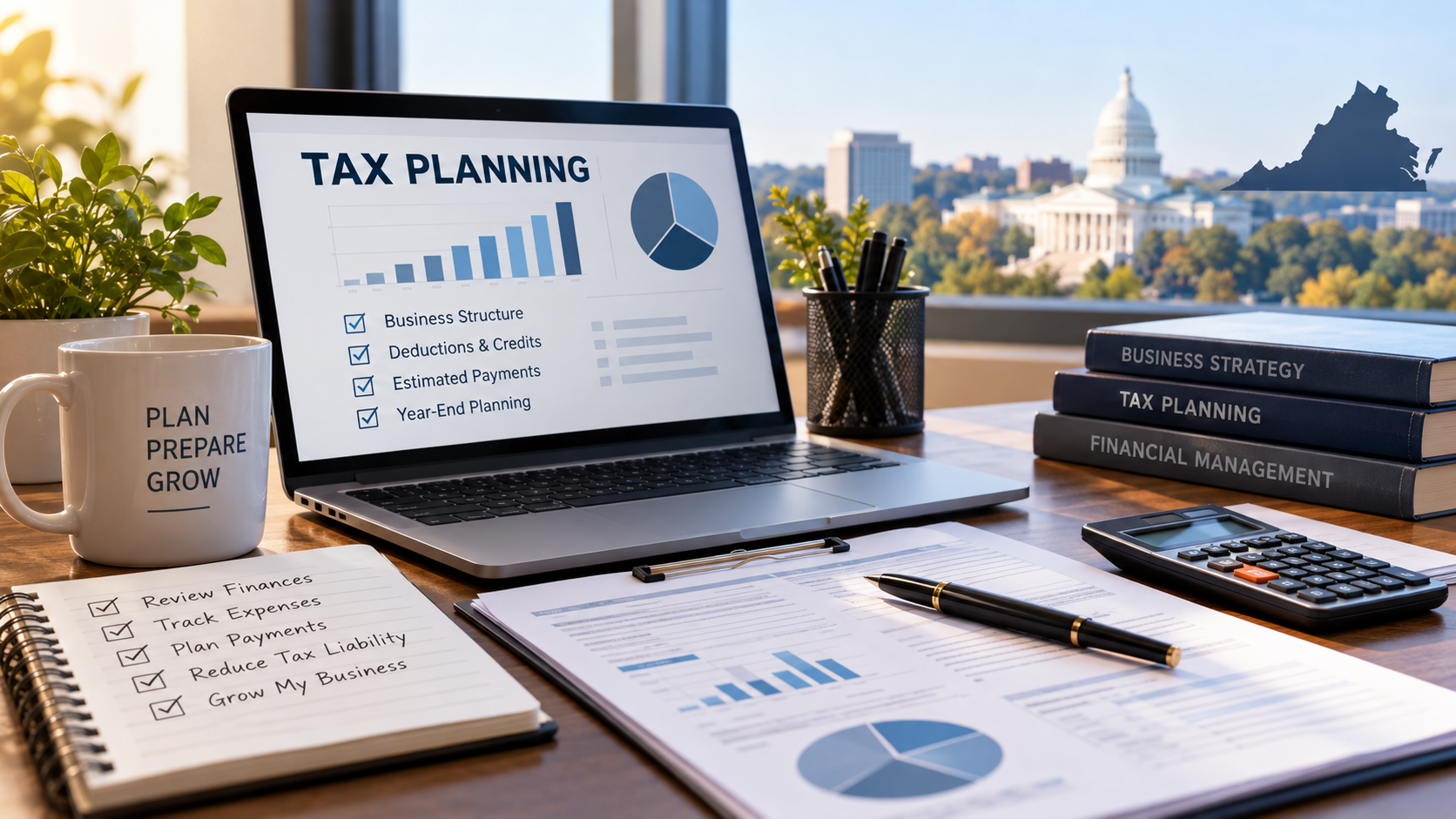
A tax bill should never catch your business off guard. Good tax planning starts long before the filing deadline and continues throughout the year. By reviewing your income, expenses, business changes, and upcoming payments regularly, you can better prepare for what you may owe and make more informed financial decisions.
For Virginia business owners, Reckenen provides practical guidance to help you stay organized and plan ahead. From reviewing your business structure to managing expenses, purchases, and year-end decisions, a well-planned approach can help reduce surprises and keep your business finances on track.
Why Tax Planning Matters for Business Owners
Tax planning is about more than preparing a return at the end of the year. It gives you time to review your finances, understand your tax obligations, manage cash flow, and identify opportunities that may apply to your business.
Effective tax planning for business owners can also help you prepare for changes in income, hiring, major purchases, or business growth. Reviewing these areas early gives you more time to gather records, adjust payments, and make decisions before important tax deadlines.
Key Tax Planning Strategies to Strengthen Your Business Finances
A strong tax strategy should fit your business rather than rely on a one-size-fits-all approach. Reviewing your finances throughout the year can help you spot potential savings, prepare for upcoming obligations, and avoid last-minute decisions.
1. Review Your Business Structure
Your business structure can affect how your income is reported and how taxes are handled. Sole proprietorships, partnerships, LLCs, S corporations, and C corporations can have different tax treatment and filing requirements.
As your business grows, changes ownership, or starts generating different levels of income, it may be worth reviewing whether your current structure still makes sense. Any change should be considered carefully because tax treatment is only one part of the decision.
2. Track Every Eligible Business Expense
Accurate expense records can help you identify costs that may qualify as deductions. Common business expenses can include advertising, insurance, office supplies, software, professional services, rent, employee wages, and certain travel costs.
Keeping receipts, invoices, and other supporting documents organized throughout the year can make tax preparation easier. It can also help you avoid overlooking legitimate small business deductions that may apply to your situation.
3. Plan and Adjust Estimated Tax Payments
Estimated tax payments should be reviewed when your business income or expenses change. A significant increase in profits, a new contract, or an unexpected business expense can affect how much you may need to pay during the year.
Reviewing your estimated payments periodically can help you avoid a large unexpected balance at tax time. It can also make cash flow easier to manage because you have a clearer idea of upcoming tax obligations.
4. Plan Major Purchases and Depreciation
Buying equipment, vehicles, technology, or other major assets can have tax and financial effects. Depending on the asset and applicable rules, you may be able to recover its cost over time through depreciation or use another available treatment.
Before making a large purchase, consider its business purpose, timing, cost, and potential tax treatment. A tax benefit should support a sound business decision rather than be the only reason for spending money.
5. Review Available Tax Credits
Tax credits can provide valuable savings when a business meets specific requirements. Federal and Virginia programs may offer credits for certain activities, investments, employees, or business expenses.
Because eligibility rules and documentation requirements can vary, review potential credits before taking action. Planning ahead can give you enough time to determine whether a credit applies and gather the records needed to support your claim.
6. Optimize Payroll and Employee Benefits
Payroll and employee benefits can affect both your business expenses and overall tax position. Review compensation, retirement plans, health benefits, and other employee programs regularly to make sure they continue to fit your business needs.
Certain qualifying business owners may also be able to claim a self employed health insurance tax deduction, depending on their circumstances and applicable tax rules. Keeping proper records is important when determining whether you qualify.
7. Strengthen Bookkeeping and Tax Records
Good bookkeeping gives you a clearer picture of how your business is performing. Keep business and personal transactions separate and regularly record income, expenses, payroll, contractor payments, mileage, equipment purchases, and tax payments.
Organized records can make it easier to support business deductions for small business and respond to questions about your tax return. They also give you better financial information for making decisions during the year.
8. Review Your Tax Strategy Before Year-End
A year-end review gives you an opportunity to look at your current income, expenses, estimated payments, purchases, employee benefits, and potential deductions or credits.
This is also a good time to review your overall tax strategies and consider whether any financial decisions should be made before the year closes. Starting early gives you more time to correct missing records and make informed choices.
How Your Business Structure Can Affect Your Taxes
The structure of your business can affect how income is reported, which tax forms you need to file, and how your business taxes are calculated. Sole proprietorships, partnerships, LLCs, S corporations, and C corporations each have different tax rules and requirements. As your business grows or your income, ownership, or operations change, reviewing your structure can help ensure it still supports your financial goals.
For established business owners, tax and estate planning can also play an important role in long-term decisions. If you are considering transferring ownership, bringing in a new partner, or eventually selling or passing on your business, planning early can help you understand potential tax considerations and prepare for a smoother transition.
Common Tax Planning Challenges and How to Avoid Them
Tax planning can become difficult when financial records are incomplete or important decisions are left until the last minute. Understanding common problems can help you stay organized and avoid preventable issues.
- Waiting until tax season: Reviewing your finances only when filing is due can leave little time to make useful changes. Check your income, expenses, and payments throughout the year.
- Mixing personal and business expenses: Separate accounts and clear records make it easier to identify legitimate business costs and support your tax return.
- Assuming every expense is deductible: Not every cost qualifies for a deduction. Check the applicable rules and keep documentation for expenses you claim.
- Ignoring estimated payments: Changes in business income can affect your tax obligations. Review estimated payments when your financial situation changes.
- Missing available credits: Deductions are not the only potential tax-saving opportunities. Review federal and Virginia credits that may apply to your business.
- Spending only to lower taxes: A purchase should make business sense first. Consider its actual value, cash flow impact, and long-term usefulness.
- Overlooking the home office deduction: Business owners who work from home may qualify for a home office tax deduction if they meet the applicable requirements. Keep records and review the rules before claiming it.
- Relying on outdated information: Tax laws and filing requirements can change. Review current federal and Virginia rules instead of relying only on previous tax returns.
Frequently Asked Questions
Does business size affect tax planning needs?
Yes. Smaller and larger businesses may have different planning needs based on their income, employees, assets, and overall business operations.
Can a new business benefit from tax planning?
Yes. Early tax planning helps new businesses organize records, understand their tax responsibilities, and prepare for future financial obligations.
How often should a business review its tax plan?
Review your tax plan regularly, especially after major changes in income, expenses, staffing, ownership, or business operations.
Does business growth create new tax responsibilities?
It can. Hiring employees, increasing revenue, or expanding operations may create additional tax, reporting, or filing requirements.
Can business owners plan for taxes when preparing a budget?
Yes. Including expected tax payments in your budget can help you set aside funds and avoid unexpected pressure on your business cash flow.
Build a Smarter Tax Plan for Your Business
Effective tax planning is a year-round process. Reviewing your business structure, expenses, estimated payments, purchases, employee benefits, and potential credits can help you stay prepared and make financial decisions with greater confidence.
Start by keeping accurate records and reviewing your business finances regularly. Taking action before deadlines gives you more time to identify opportunities, prepare for payments, and address potential issues.
Ready to take a more organized approach to your business taxes? Reckenen can help you plan ahead, manage your tax obligations, and make informed financial decisions.