
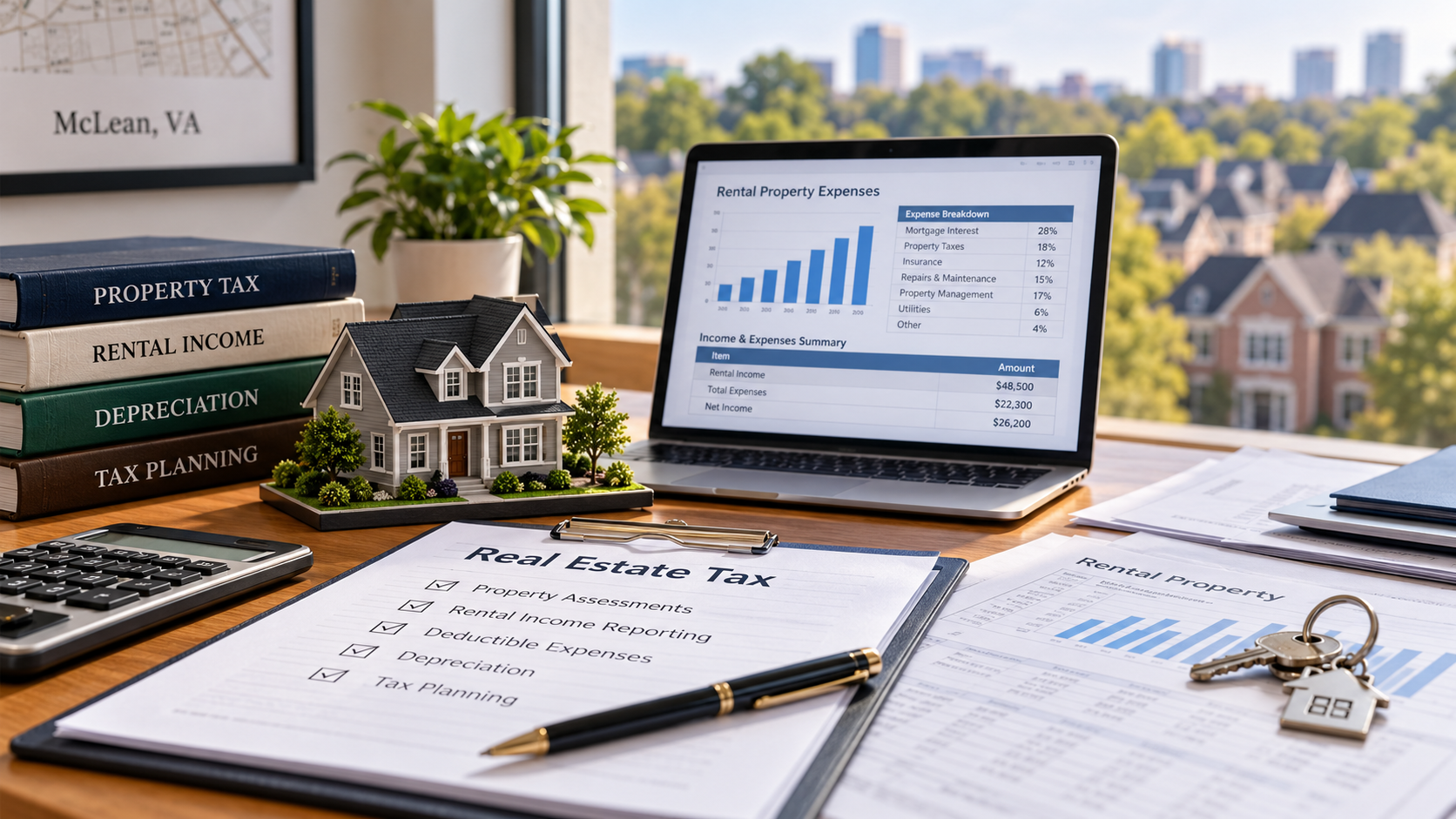
Real estate investors in McLean, Virginia, face tax challenges involving property assessments, rental income, depreciation, and capital gains. Understanding these obligations and keeping accurate financial records can help investors avoid common mistakes and make informed decisions.
Property management accounting in McLean, VA helps investors organize rental income, track expenses, and maintain accurate tax records. With consistent accounting and proactive tax planning, property owners can manage their finances more effectively and stay prepared for tax responsibilities. This approach also makes it easier to monitor property performance and plan for future investment decisions.
Managing Property Tax Issues in McLean
Property taxes are a major expense for real estate investors in McLean. Changes in assessed property values and local tax rates can affect rental costs and overall profitability. Understanding these factors helps investors budget accurately and plan their property expenses.
Reviewing Fairfax County Property Assessments
McLean property owners rely on Fairfax County assessments to determine taxable property values. If an assessment seems higher than the property’s market value, investors can review the notice and compare recent sales to identify potential discrepancies.
Keeping purchase records and valuation documents helps investors support an appeal when necessary. Accurate real estate financial recordkeeping also makes it easier to organize property information and manage tax responsibilities.
Managing Property Taxes and Appeals
Include property tax expenses in annual budgets to avoid unexpected costs and inaccurate rental profit estimates. Reviewing tax bills regularly helps investors track changes and prepare for upcoming payments.
If an assessment appears incorrect, investors can check Fairfax County’s appeal procedures and deadlines. Supporting documents and accurate valuation evidence can strengthen their case.
Rental Income and Property Expense Management
Managing rental income requires accurate records and consistent financial tracking. Rental income tax reporting helps investors account for taxable rental earnings and identify eligible property expenses under applicable IRS rules. Mixing personal and rental finances or losing receipts can lead to reporting errors.
A clear recordkeeping system makes it easier to track income, manage rental property expenses, and prepare tax documents. Investors with multiple properties should maintain separate records for each property to monitor expenses and evaluate financial performance.
Reporting Rental Income and Deductible Expenses
Rental income may include monthly rent, advance payments, and certain expenses paid by tenants on the owner’s behalf. Security deposits may also have tax implications depending on whether they are refundable or used to cover rent or property damage.
Common deductible rental property expenses include:
- Mortgage interest and property taxes
- Insurance premiums and utility costs
- Repairs and routine maintenance
- Property management and professional fees
- Advertising costs for finding tenants
However, major improvements that increase a property’s value or extend its useful life may need to be capitalized and depreciated rather than deducted immediately. Accurate expense tracking and supporting records help investors report rental income correctly and manage their tax obligations.
Maintaining Accurate Property Financial Records
Accurate financial records help investors track rental income, separate expenses, and prepare tax returns. Keeping receipts, bank statements, and lease agreements organized makes reporting easier.
Professional property management accounting McLean, VA services can help organize transactions, track expenses, and maintain reliable records while monitoring rental cash flow and property performance.
Depreciation and Rental Property Tax Challenges
Depreciation is an important consideration for investors who own income-producing real estate. It generally allows the cost of qualifying property components to be recovered over time, subject to federal tax rules. However, depreciation calculations can become complicated when a property includes land, buildings, improvements, and assets with different recovery periods.
Rental Property Depreciation Rules
For U.S. federal tax purposes, rental property depreciation depends on the type of property and its use. Investors should understand these key points:
- Land: Generally cannot be depreciated.
- Residential rental buildings: Usually depreciated over 27.5 years.
- Nonresidential real property: Generally uses a 39-year recovery period.
- Property improvements: May be depreciable depending on their classification and applicable tax rules.
- Supporting records: Purchase documents, cost allocation records, and improvement invoices help support depreciation calculations.
The correct depreciation method depends on when the property was placed in service and the type of asset involved. Investors should exclude the land’s value from the depreciable basis and maintain accurate records for tax reporting.
Passive Activity Loss Limitations for Rental Properties
Rental property losses may be subject to passive activity rules, which can limit how much investors deduct from other income. Eligibility depends on factors such as income, participation, and the type of rental activity.
Some investors may qualify for special loss allowances or different tax treatment under real estate professional rules. Understanding these requirements helps McLean property owners plan their taxes more effectively.
Capital Gains and Real Estate Transactions
Selling an investment property may involve capital gains taxes and depreciation-related tax obligations. Understanding these costs helps investors plan sales and make informed financial decisions.
Taxable gains depend on the sale proceeds and adjusted tax basis. Investors should keep these records:
- Purchase and closing documents
- Capital improvement expenses
- Depreciation records
- Sale-related expenses
A qualifying 1031 exchange may defer eligible capital gains when investors exchange qualifying real property held for investment or business use. Specific IRS rules and deadlines must be followed.
Investors should review potential capital gains, depreciation, selling expenses, and future investment plans before finalizing a property sale. Professional tax advice can help them understand their options.
Property Accounting and Tax Planning
Organized accounting helps investors track rental income, expenses, payments, and property performance. Accurate financial records also simplify tax preparation and help identify rising costs.
For investors managing multiple properties, rental property accounting helps organize transactions, track expenses, and identify financial discrepancies. Regular reviews also keep records accurate and support better tax planning.
Managing Rental Finances With Professional Accounting
Investors need an organized system to track rental income, monitor expenses, and reconcile bank accounts. Accurate accounting records simplify tax reporting and help prevent financial errors. Regular reviews also help investors identify unusual expenses and maintain better control over rental finances.
Effective rental property accounting also helps investors monitor cash flow, compare property performance, and identify rising expenses. This supports better financial decisions and more organized tax planning.
Organizing Property Records for Accurate Tax Reporting
Good recordkeeping should be an ongoing process rather than an activity reserved for tax season. Investors can create a separate digital folder or accounting category for each property and keep documents organized by financial year. This approach makes it easier to locate supporting evidence when preparing returns or responding to questions about reported transactions.
Important records may include:
- Lease agreements and rental income statements.
- Bank statements and account reconciliation reports.
- Mortgage interest and property tax documents.
- Repair invoices, contractor bills, and maintenance receipts.
- Records of capital improvements and depreciation.
- Insurance statements and property management fees.
- Purchase, refinancing, and sale documents.
Investors should retain records for the periods required by applicable tax rules and keep important property basis and depreciation information for as long as it may be relevant. Secure digital backups can provide an additional layer of protection against lost or damaged paperwork.
Managing Tax Payments and Filing for Rental Properties
Rental income can increase an investor’s tax liability, making it important to review income, deductions, and estimated tax payment requirements throughout the year. Accurate financial records help McLean real estate investors prepare for tax filing.
Planning ahead can reduce last-minute stress and help investors avoid potential underpayment penalties. Reviewing IRS deadlines and keeping property records organized makes tax preparation easier.
Tax Planning for Real Estate Investors
Real estate investors can manage tax responsibilities more effectively by reviewing their finances regularly and keeping accurate records. Proper planning helps identify reporting errors, track expenses, and prepare for upcoming tax obligations.
Organizing Rental Finances and Tax Records
Investors should review rental income and operating costs to monitor cash flow and identify rising expenses. Keeping personal and rental transactions separate, along with organizing receipts, invoices, and depreciation records, supports accurate tax reporting.
Before selling a property or arranging a 1031 exchange, investors should review the potential tax consequences and applicable requirements. Tracking estimated tax payments and filing deadlines, along with seeking professional guidance when needed, can support better financial decisions.
FAQs:
1. What are the main tax challenges for McLean real estate investors in 2026?
Key challenges include property taxes, rental income reporting, depreciation, deductible expenses, and capital gains. Proper planning can help investors manage these responsibilities.
2. Which expenses can rental property owners deduct?
Eligible expenses may include mortgage interest, property taxes, insurance, repairs, and management fees. Capital improvements may follow different tax rules.
3. How does depreciation affect the sale of a rental property?
Depreciation reduces a property’s adjusted tax basis and can affect taxable gains when it is sold. Certain gains may be subject to special tax treatment.
4. Can a 1031 exchange eliminate taxes on an investment property sale?
A qualifying 1031 exchange can defer eligible capital gains rather than eliminate taxes permanently. Investors must follow specific IRS rules and deadlines.
5. How can accounting services help real estate investors prepare for taxes?
Accounting services help organize rental income, track expenses, and maintain accurate financial records. This makes tax preparation and financial planning easier.
Take Control of Your Property Finances
Managing real estate taxes requires more than filing an annual return. Investors need organized financial records, a clear understanding of property expenses, and a plan for handling depreciation, rental income, and future sales. Reviewing these areas throughout the year can help McLean property owners approach tax responsibilities with greater clarity.
Reckenen provides tax and accounting support for small businesses and property owners who need help understanding their financial responsibilities. With consistent recordkeeping and informed tax planning, real estate investors can make more confident decisions about their properties and long-term financial goals.
Connect with Reckenen to discuss your real estate tax and accounting needs.