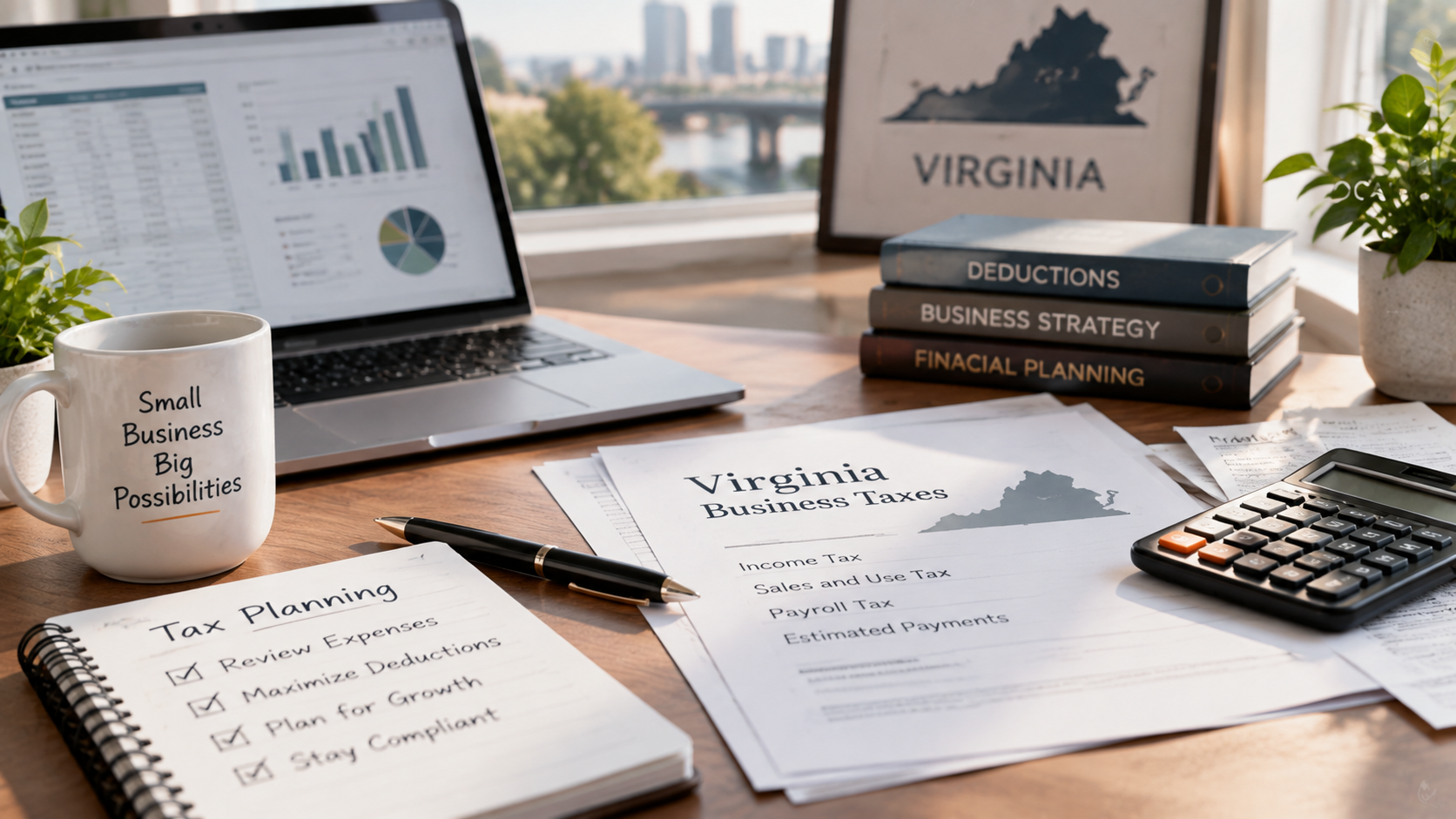
Taxes can take a noticeable share of a small business’s profits, especially when owners wait until tax season to think about their tax bill. Virginia business owners can take steps throughout the year to manage taxable income, organize expenses, and prepare for their tax obligations. Understanding how the tax rules apply to your business can help you avoid missed opportunities and unnecessary costs.
Good tax planning starts before the tax return is due. Keeping accurate records, reviewing business expenses, and planning for major financial decisions can help small business owners take a more organized approach to their taxes. Reckenen helps businesses in Virginia navigate these decisions with practical tax guidance designed around their financial needs.
What Is Tax Liability for a Small Business?
Tax liability is the amount of tax a small business or its owner may owe based on taxable income and applicable tax rules. It is influenced by business income, eligible expenses, deductions, credits, and the way the business is structured. Understanding these factors can help owners prepare for their tax obligations instead of facing an unexpected bill.
For Virginia small businesses, tax obligations may include federal income tax, self-employment tax, payroll taxes, and applicable state taxes. A business owner’s tax bill can change from year to year as income, expenses, and other circumstances change. Knowing what affects your liability can help you understand your options and develop a practical tax strategy throughout the year.
How Can You Reduce Your Business Tax Liability?
Reducing tax liability involves reviewing your income, expenses, deductions, and business decisions throughout the year. The right approach depends on your business income, expenses, entity type, and overall financial situation. The following strategies can help Virginia small businesses manage taxable income while staying within applicable tax rules.
1. Track All Eligible Business Expenses
Keeping clear and accurate records of your business expenses can help you claim deductions you qualify for and reduce your taxable income. Common expenses may include office supplies, insurance, advertising, professional services, rent, employee wages, and certain travel or vehicle costs. Keep receipts, invoices, and other supporting records so you can verify each expense when preparing your tax return.
2. Review Your Business Structure
Your business structure can affect how your income is reported and taxed, as well as the tax requirements you need to follow. Sole proprietorships, partnerships, LLCs, S corporations, and C corporations may have different tax treatment and filing requirements. As your business changes or grows, reviewing your structure with a CPA can help you determine whether it still fits your financial and tax needs.
3. Use Depreciation for Qualifying Property
If your business purchases equipment, machinery, furniture, or other qualifying long-term property, you may be able to recover its cost through depreciation. Tax provisions such as Section 179 may also apply to certain qualifying purchases, depending on the tax year and property involved. Keep records of the purchase price, purchase date, and when the asset was placed in service to support your tax reporting.
4. Consider Retirement Plan Contributions
Contributing to a retirement plan can help you save for the future while potentially providing tax benefits for your business or personal tax situation. Depending on your business, options may include SEP IRAs, SIMPLE IRAs, and other qualified retirement plans. Contribution limits and tax treatment can vary, so review the rules and consider professional guidance before contributing.
5. Keep Business and Personal Finances Separate
Using separate bank accounts and credit cards for your business makes it easier to track income, expenses, and cash flow throughout the year. It also helps prevent personal purchases from being mixed with business costs that may qualify for deductions. Maintain organized receipts, bookkeeping records, and mileage logs to make tax preparation easier and provide support for your reported expenses.
6. Plan for Estimated Tax Payments
Some business owners must make estimated tax payments throughout the year based on their expected income and tax liability. Setting aside money regularly can help you manage these payments and avoid a large unexpected bill when you file your return. Review your income and tax situation during the year so your estimated payments can be adjusted when your financial circumstances change.
Common Tax Mistakes to Avoid
Small businesses can reduce unnecessary tax problems by avoiding simple mistakes throughout the year. Good recordkeeping, proper planning, and understanding the rules can help you claim legitimate deductions without creating compliance issues.
- Mixing personal and business expenses: Keep separate bank accounts and credit cards for business use. A personal purchase does not become deductible just because it was paid from a business account.
- Losing important records: Keep receipts, invoices, bank statements, mileage logs, and other supporting documents. Organized records make it easier to support deductions and prepare an accurate return.
- Choosing an entity type only for tax savings: Your entity type can affect taxes, legal responsibilities, and administrative costs. Consider the complete impact before changing your business structure.
- Ignoring Virginia tax requirements: Depending on your business, you may need to manage Virginia income tax, sales and use tax, withholding, estimated payments, or pass-through entity requirements.
- Waiting until tax season to plan: Reviewing income, expenses, and estimated taxes throughout the year gives you more time to plan and prepare for your tax bill.
- Claiming expenses without checking the rules: Business meals, vehicles, home office costs, and depreciation can have specific requirements. Make sure an expense qualifies and keep records before claiming it.
When Should You Work With a CPA for Tax Planning?
A CPA or qualified tax professional can be especially helpful when your business becomes more complex. From changing your business structure and hiring employees to managing deductions or estimated taxes, professional guidance can help you understand your options and stay on track.
Working with a CPA throughout the year can bring your bookkeeping, deductions, tax filings, and overall tax strategy together. This approach can help you stay organized, avoid costly mistakes, and prepare for changing tax obligations.
FAQs
1. Can hiring employees affect a small business’s tax liability?
Yes. Hiring employees can affect payroll taxes and reporting requirements, while certain employee-related costs may qualify as business deductions.
2. What records should a small business keep for tax purposes?
Keep receipts, invoices, bank statements, payroll records, mileage logs, and other documents that support your business income and expenses.
3. How often should a small business review its tax strategy?
Review your tax strategy throughout the year, especially when your income, expenses, employees, or business operations change.
4. Can changing a business entity reduce tax liability?
Changing your entity type may affect how your business is taxed, but it does not always reduce taxes. Consider the full tax and legal impact before making a change.
5. Can a small business owner reduce taxes without increasing business expenses?
Yes. Reviewing eligible deductions, retirement contributions, depreciation, and your business structure may help reduce taxable income without unnecessary spending.
Take Control of Your Business Taxes
Reducing your tax liability requires year-round planning, accurate records, eligible deductions, and a tax approach that fits your business structure and financial needs. Staying organized can help you prepare for tax obligations and avoid common mistakes.
Get expert tax guidance from Reckenen and make informed tax decisions for your Virginia business.