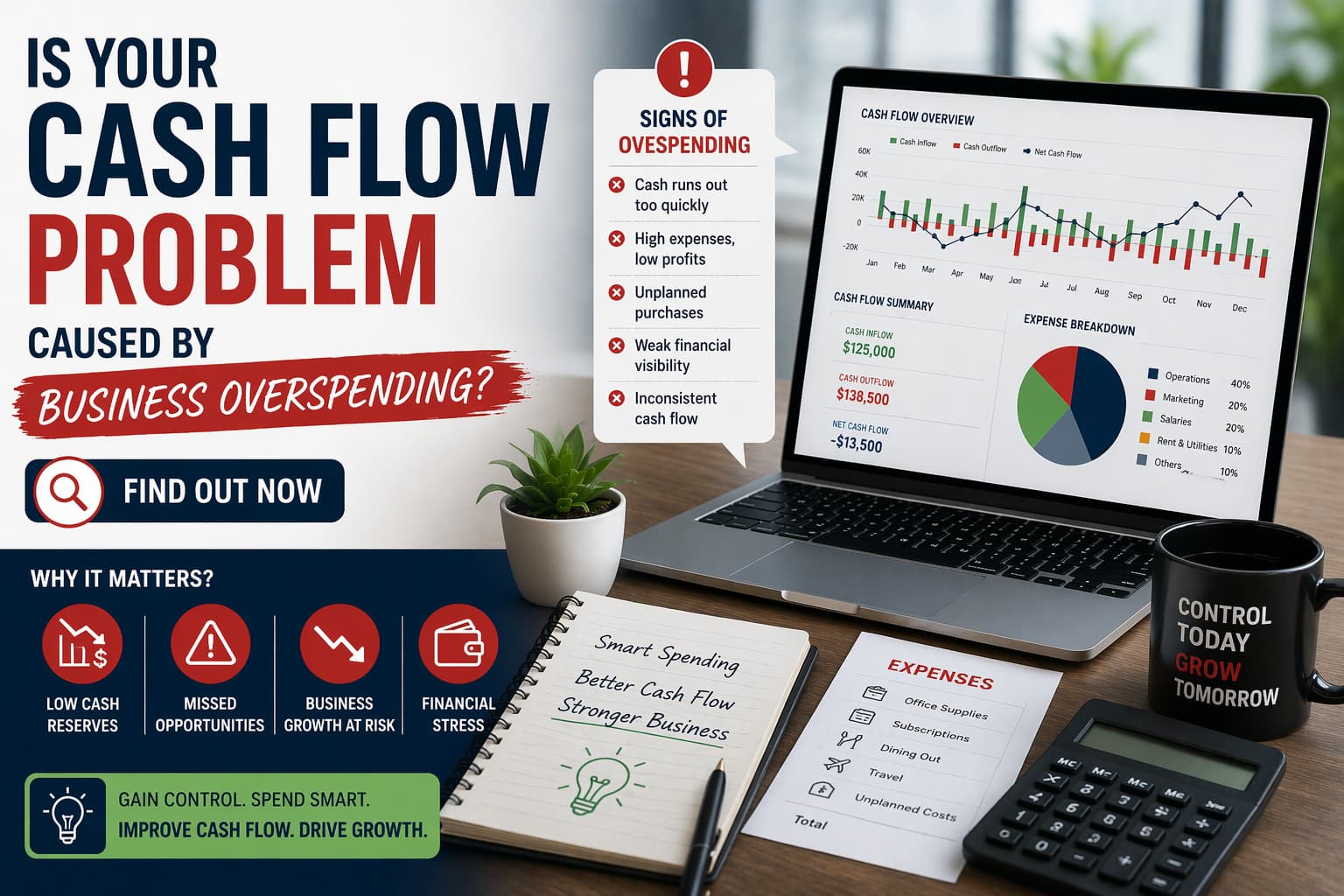
Is Your Cash Flow Problem Caused by Business Overspending? Find Out Now

Cash Flow Problem

Your business is making sales, but your bank balance still feels low. Bills are coming in, and cash is going out faster than expected. If this sounds familiar, your problem may not be low income, it could be overspending.

Cash flow problems are very common in small businesses. Many owners focus only on sales and forget to control expenses. Overspending slowly drains your cash, even when your business looks successful on paper. The worst part? Most business owners do not notice this problem until it becomes serious. That’s where Reckenen helps by giving you clear financial insights and control over your cash flow.

What Is Cash Flow?

Cash flow is the money coming in and going out of your business.

  • Money in: Sales, payments from clients
  • Money out: Rent, salaries, tools, bills

Many people confuse profit with cash flow. Profit is what you earn after expenses. But cash flow is the actual cash you have in your bank.

Why it matters:

You need a steady cash flow to pay your bills and employees on time. It also helps you avoid debt and late payments, keeping your finances under control. Most importantly, strong cash flow keeps your business running smoothly without stress.

Example:
You may have $10,000 in sales (profit looks good), but if your expenses are high and payments are delayed, you may still have no cash available.

Is Overspending Hurting Your Business?

Overspending does not always look obvious. It often hides behind “business growth” or “necessary expenses.” There is a big difference between the following:

  • Smart spending: Investing in tools that help you grow
  • Wasteful spending: Paying for things you don’t really need

Example:
Buying expensive software you rarely use is a waste. Hiring the right employee is smart spending.

Top Signs Your Cash Flow Problem Is Caused by Overspending

Overspending often hides behind daily business activities and goes unnoticed until cash problems appear. If your money is running out despite good sales, these signs can help you identify the real issue.

1. You Rely on Credit to Cover Daily Expenses

If you are using credit cards to pay for rent, salaries, or regular bills, it is a clear warning sign. Taking loans just to manage daily operations shows that your expenses are higher than the cash coming into your business.

2. Sales Are Increasing, but Cash Is Not

Your revenue may be growing, but your bank balance is not improving. This usually means your business is spending too much, and high expenses are reducing your actual cash.

3. You’ve Lost Track of Business Expenses

When you do not have a clear record of your spending or fail to review it regularly, small daily costs start to add up. Over time, these unnoticed expenses can turn into a major financial problem.

4. Too Many Subscriptions and Tools

Paying for apps or software you rarely use is a common issue. Many businesses have multiple tools that do the same job, and even small monthly costs can grow into a large yearly expense.

5. High Overhead Costs

If your rent, salaries, or utility bills are too high, it can put pressure on your cash flow. When fixed costs are not aligned with your revenue, your business struggles to maintain balance.

6. Buying More Than You Need

Overstocking inventory or buying items “just in case” can lock your money in unused products. This reduces the cash available for important business needs.

7. No Clear Budget or Financial Plan

Without a proper budget, spending becomes uncontrolled. When decisions are based on guesswork instead of data, overspending becomes normal and harder to manage.

Common Causes of Overspending in Businesses

Many businesses overspend without realizing why. Common reasons include:

  • Poor financial planning
  • Not tracking expenses regularly
  • Emotional or impulse buying
  • Fast business growth without control
  • Ignoring small recurring costs

Example:
A business owner signs up for multiple tools during growth, but never cancels unused ones.

Quick Fixes to Control Overspending

You can take simple steps today:

  • Review all expenses and cut what you don’t need
  • Cancel unused subscriptions
  • Talk to vendors and reduce costs
  • Set spending limits
  • Track expenses every week

Even small changes can save a lot of money.

How Overspending Impacts Cash Flow

Overspending can seriously harm your business by reducing profit margins, making it harder to pay bills on time, and increasing debt with extra interest costs. Over time, it can also lead to negative cash flow, putting your business under constant financial pressure. 

Real-world example:
A business earns well but spends too much on tools and staff. At the end of the month, there is no cash left for rent or salaries.

Long-Term Strategies for Healthy Cash Flow

For long-term success, build strong financial habits:

  • Create a monthly budget
  • Use cash flow forecasting
  • Build a cash reserve for emergencies
  • Improve bookkeeping and financial reports
  • Work with a professional CPA

These steps help you stay in control and avoid future problems.

When to Seek Professional Help

Sometimes, you need expert support.

Signs you need help:

  • You always run out of cash
  • Your debt keeps increasing
  • You don’t understand your financial reports

A professional can:

A professional can help you clearly identify where your business is overspending and create a structured financial plan to control it. With expert guidance, you can manage your cash flow better, reduce unnecessary costs, and make smarter financial decisions.

How Reckenen CPA Can Help

Reckenen CPA helps businesses take control of their finances with simple and clear strategies. They focus on identifying waste, improving financial visibility, and helping you understand exactly where your money is going. With services like expense analysis, cash flow planning, accurate bookkeeping, and strategic guidance, they support smarter decision-making. With the right support, you can reduce overspending, manage cash better, and build a stronger, more stable business.

FAQs

What is the main cause of cash flow problems?

Overspending and poor financial planning are the most common causes.

How do I know if I am overspending in my business?

If your expenses are high, cash is low, and you rely on credit, you are likely overspending.

Can a profitable business still have cash flow problems?

Yes. A business can show profit but still have no cash due to high expenses.

How often should I review my expenses?

You should review expenses weekly or monthly.

What is the best way to improve cash flow quickly?

Cut unnecessary expenses and track your spending closely.

Take Control of Your Cash Flow 

Overspending is one of the biggest hidden reasons behind cash flow problems. Many businesses focus on earning more but forget to control spending. The solution is simple: track your expenses, plan your finances, and stay in control. Even small changes can improve your cash flow and protect your business from future risks.

Review your finances today and take control of your cash flow with expert support from Reckenen.

Share insights

Email
Facebook
X
LinkedIn

Professional tax return preparation helps reduce filing errors by ensuring that all financial information is accurate, complete, and properly reviewed before submission. Tax professionals check income, deductions, and documents carefully, which reduces mistakes like wrong calculations or missing details.

They also stay updated with tax laws and use the correct forms and filing status. This lowers the risk of penalties, delays, and IRS issues, making the entire tax filing process more accurate and stress-free with Reckenen. 

What is Tax Return Preparation?

Tax return preparation is the process of collecting financial information and filing it with the tax authorities in an accurate and legal way. It includes reporting income, claiming deductions and credits, calculating taxes owed or refunds, and submitting the required forms to the IRS or relevant tax department.

In simple words, tax return preparation means organizing your financial details and filing your taxes correctly so you pay the right amount and avoid penalties or errors. A proper tax due diligence list is often used by professionals to ensure nothing is missed.

Why Tax Filing Errors Matter

Filing taxes may look simple, but even a small mistake can cause serious problems. Errors can lead to penalties, delayed refunds, or even IRS audits. Many people think they can manage it alone, but tax rules are complex and change often.

Most common tax mistakes happen because of missing details or wrong calculations. This is why professional tax return preparation is important. It helps reduce errors, ensures accuracy, and keeps everything compliant with tax laws. 

Why Professional Tax Preparation Matters

Tax filing errors can create serious financial and legal problems. From penalties to audits, the risks are real and often avoidable.

Professional tax return preparation helps ensure accuracy, compliance, and better financial outcomes. It reduces stress, saves time, and protects taxpayers from costly mistakes. A tax expert can help handle complex filings more safely. In today’s complex tax environment, choosing professional support like a tax filing pro, for short, is not just helpful; it is a smart decision. 

Common Tax Filing Errors Taxpayers Make

Many taxpayers make similar mistakes without realizing it. These include reporting incorrect income, missing deductions or credits, making calculation errors, and choosing the wrong filing status. Some people also forget to attach required forms or make simple data entry mistakes while filing manually.

Even one small tax filing error can change the final tax amount and create issues with the IRS. 

Why Errors Happen in Self-Prepared Tax Returns

Self-prepared tax returns often contain mistakes because most people are not fully aware of tax laws. Rules change frequently, and it becomes difficult to keep up with updates.

Another major reason is misunderstanding deductions and credits. Many taxpayers either miss benefits they qualify for or claim them incorrectly. Poor record-keeping throughout the year also leads to confusion during filing. Some people rely too much on software or AI tools, but without proper knowledge, mistakes still happen when users try to get their own tax filing done without support.

How Professional Tax Preparers Reduce Filing Errors

  • Carefully review all financial data to ensure accuracy
  • Check that all documents are complete and correct
  • Verify every number to avoid calculation mistakes
  • Apply updated tax laws and correct deductions
  • Avoid outdated or incorrect filing practices
  • Review the entire return before submission to catch errors
  • Select the correct tax forms and filing status
  • Ensure proper income reporting and classification.

Professionals also follow a structured tax due diligence list to ensure accuracy at every step. 

Role of Due Diligence in Tax Preparation

Due diligence means carefully checking all tax information before filing. It is an important part of professional tax preparation.

Tax experts verify income details, review deductions, and ensure that all claims are accurate. This process reduces the chances of errors and helps maintain compliance with tax regulations. It also lowers the risk of penalties and builds confidence in the final return.

How Professional Tax Preparation Helps Avoid IRS Penalties

IRS penalties usually happen when there are errors in reporting or missing information. Professional tax preparation helps avoid these problems by ensuring everything is correct before submission.

It prevents incorrect deductions, reduces the chances of underreporting income, and ensures that tax returns are filed on time. Proper documentation is also maintained, which is very important in case of an audit. This reduces stress and protects taxpayers from unnecessary financial loss.

Benefits of Using Professional Tax Services

  • Higher accuracy in tax returns, reducing the risk of penalties
  • Saves time by handling complex calculations and paperwork
  • Identifies tax-saving opportunities that are often missed
  • Ensures proper compliance with tax laws
  • Provides peace of mind during tax season

When You Should Not Rely Only on DIY or AI Tools

DIY tools may work for simple tax situations, but they are not always reliable for complex cases. If you have business income, multiple income sources, investments, or rental properties, professional help becomes necessary.

Major financial changes during the year can also make tax filing more complicated. In such cases, relying only on software or AI tools increases the risk of tax filing errors. When accuracy and compliance are important, professional support is the better choice.

Professional vs DIY Tax Filing Comparison

DIY tax filing may seem cost-effective, but it comes with higher risk. Many people miss deductions or make mistakes that cost them more in the long run.

Professional tax preparation, on the other hand, follows a structured process. Experts review every detail and ensure compliance with tax laws. This leads to better accuracy and reduces the chances of audits. In simple terms, DIY saves money upfront, but professional services like a tax filing pro for short save money in the long run. 

FAQs

  1. Why should I use a professional tax preparer?

A professional tax preparer helps ensure your tax return is accurate and complete. They also help you avoid errors, reduce penalties, and find possible tax savings.

  1. What process do professionals use to ensure accuracy?

They review all financial documents, cross-check data, apply updated tax laws, and verify calculations before filing. This step-by-step process reduces mistakes.

  1. What are the cons of using a professional tax preparer?

The main drawback is the cost of the service. However, this cost is often lower than the penalties or losses caused by filing errors.

  1. Are tax preparers responsible for mistakes?

Tax preparers are responsible for the work they do, but the taxpayer is also legally responsible for the final return. That is why choosing a qualified professional is important.

  1. When should I hire a professional tax preparer?

You should consider hiring one if you have complex finances or want to reduce tax filing errors and ensure full compliance. 

File Smart, Stay Safe 

Tax mistakes can cost more than you think, but they are avoidable. Professional tax return preparation brings accuracy, compliance, and peace of mind by catching errors before they become problems. Instead of risking penalties or delays, you get a smooth, reliable filing process. In simple terms, working with a professional is not just about filing taxes; it’s about protecting your money, your time, and your financial future.

Avoid costly mistakes; trust Reckenen to get your taxes right the first time.