
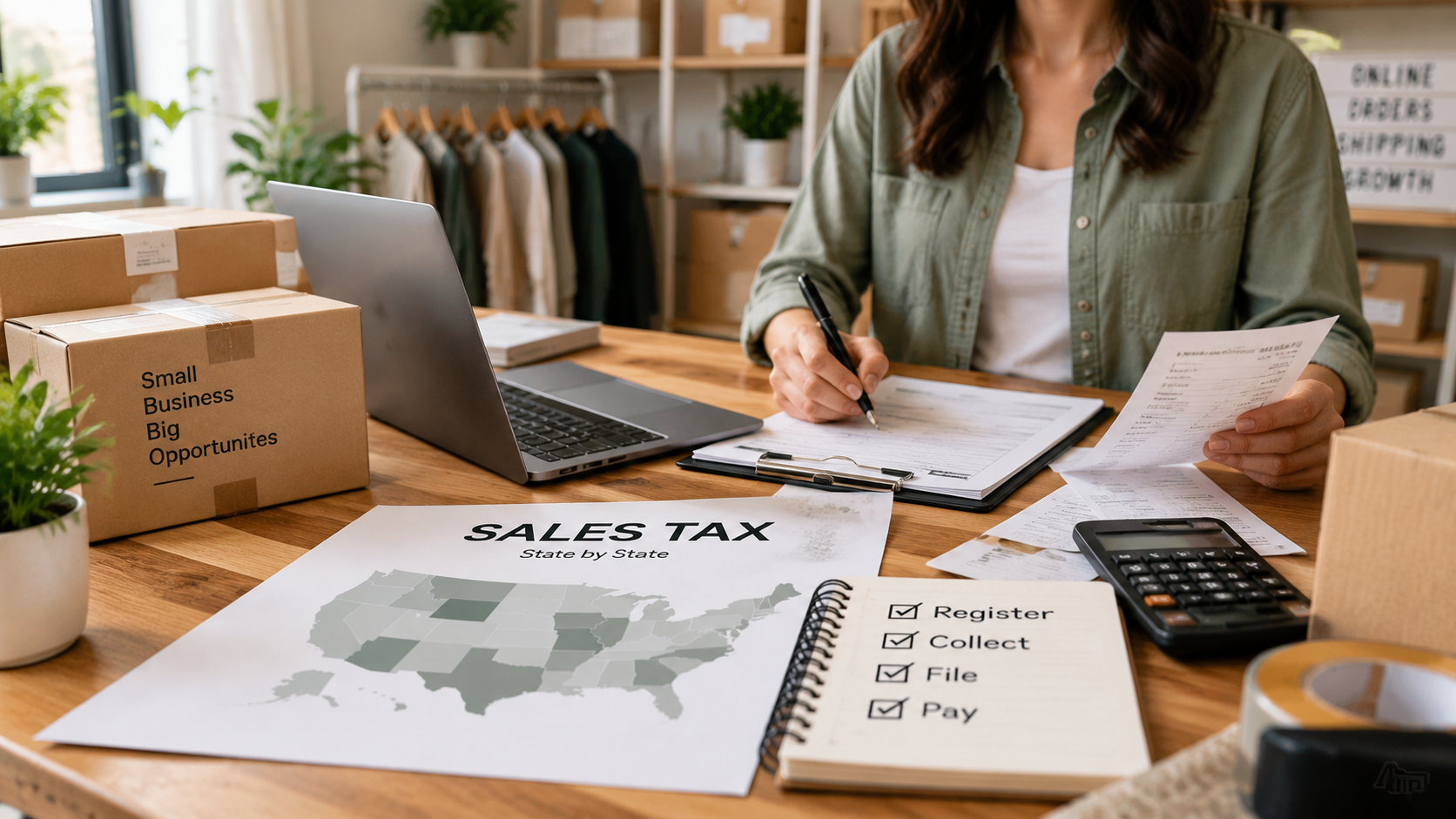
Sales Tax Compliance for Small Businesses: A Practical Guide

Sales Tax Compliance

One missed sales tax form. That’s all it takes to turn a growing small business into a business facing fines, back taxes, and a stressful audit letter in the mail.

Sales tax feels simple on the surface. You sell something; you charge tax; you send it to the state. But once your business grows, sells online, or ships to other states, the rules multiply fast. Every state sets its own rates, deadlines, and even its own definition of what counts as “taxable”. If you’re a small business owner who wants to get this right without hiring a full tax department, Reckenen breaks it down for you in plain, simple steps in this guide.

What Sales Tax Compliance Actually Means

Sales tax compliance is the full cycle of doing sales tax the right way. It’s not just charging customers a percentage at checkout. It covers four steps:

  • Registering with the state before you start collecting
  • Charging the correct tax rate on every sale
  • Reporting your sales through a tax return
  • Sending the money you collected to the state on time

Here’s the part many new business owners miss: sales tax isn’t your money. You’re collecting it on behalf of the state and holding it until you file. Treating it like extra revenue is one of the fastest ways to end up owing penalties you didn’t expect.

1. Understanding Nexus: Do You Even Need to Collect?

Before you charge a single cent of sales tax, you need to know where you have “nexus”. Nexus is simply the legal connection between your business and a state that requires you to collect tax there. Without nexus, you have no obligation to collect. There are two main ways your business can create nexus.

Physical nexus is the traditional kind. You have a physical nexus in a state if you have an office, store, or warehouse there; employees or contractors working there; or inventory stored there, including stock held in a third-party fulfilment centre. Even a short-term presence, like working a trade show for a weekend, can trigger this.

Economic nexus applies thanks to a 2018 Supreme Court ruling, which means physical presence is no longer the only trigger. Most states now require out-of-state sellers to collect tax once they cross a sales threshold. A common example is $100,000 in sales or 200 transactions in a state within a year, though every state sets its own number. This matters most for online sellers, who could be based in one state but owe tax in a dozen others simply because their online sales grew.

2. What’s Actually Taxable

This is where sales tax gets tricky. What’s taxable in one state might be tax-free in another. A few examples show how much this varies:

  • Clothing is fully taxed in most states but exempt in several others
  • Groceries are often taxed at a reduced rate, or not taxed at all
  • Digital products, like software or ebooks, are taxable in some states and exempt in others
  • Services such as consulting or repairs are taxed in certain states but not most others

Before you assume something is taxable or exempt, check the specific rule for each state where you sell. Guessing wrong means either overcharging customers or underpaying the state, and both create problems down the line.

A Practical Guide, Step by Step

Now that you know the rules, here’s exactly how to put them into action. 

Register for Sales Tax the Right Way

Once you know where you have a nexus, registration comes next. There’s no single national process. You register separately with each state where you owe tax, usually through that state’s Department of Revenue website.

When you apply, most states will ask for your business name, address, and EIN, a description of what you sell, the date you started selling in that state, and basic information about the business owners. Registration is often free or low-cost, and many states issue your permit within a few days. Skip this step, and you legally can’t charge customers sales tax, even if you know you should.

Calculate the Correct Tax Rate

Sales tax rates aren’t just one number per state. They stack. A single sale might include a state rate, a county rate, a city rate, and sometimes a special district rate on top of that. With thousands of tax jurisdictions across the country, the rate can change from one street to the next.

Most states use destination-based sourcing, meaning you charge tax based on where your customer receives the product, not where your business is located. A small number of states use origin-based sourcing for in-state sales only. Because rates shift so often as local laws change, many small businesses use tax calculation software instead of tracking rates by hand.

File and Pay on Time

Once you’re registered and collecting tax correctly, you’ll need to file returns on a schedule the state assigns, usually monthly, quarterly, or annually depending on your sales volume.

Each filing period, you’ll log in to the state’s tax portal, report your total sales, taxable sales, and tax collected, and submit payment for what you owe. Here’s a detail that catches people off guard: even if you had zero taxable sales in a period, many states still require you to file a “zero return”. Skipping it, even with nothing owed, can lead to penalties or trigger an audit.

Fix Any Past Mistakes

Realising you should have been collecting tax in a state and weren’t happens more often than you’d think. The good news is that it’s fixable, especially if you act before the state finds you first.

  • Review when your sales crossed the nexus threshold in that state so you know how far back the obligation goes.
  • Many states will reduce or waive penalties if you come forward before they contact you, often limiting the lookback period to about four years.
  • You can only charge tax after your registration is approved, so get that done first.
  • If multiple states or several years are involved, an experienced advisor can negotiate terms and help you avoid triggering a full audit.

FAQs

Do I need to collect sales tax if I only sell online?

Yes, if you have a nexus in that state, even without a physical location or office there, once your sales cross that state’s threshold, you may have a sales tax obligation.

What happens if I forget to file a sales tax return?

Most states charge penalties for late or missed filings, even when you owed zero tax, so filing on time every period matters.

Is sales tax the same rate everywhere in a state?

No, rates stack across state, county, city, and district levels, so the total rate can change block by block within one state.

Can I get in trouble for not collecting sales tax in the past?

Yes, but it’s fixable. Voluntary disclosure programmes can reduce or waive penalties if you come forward before the state does.

Do all products and services get taxed the same way?

No, taxability depends on both the state and what you’re selling, so the same product can be taxed differently in each state.

Staying Compliant Without the Stress

Sales tax compliance isn’t about memorising every rule in every state. It’s about building a routine: know where you have nexus, register properly, charge the right rate, and file on time, every time. Small, consistent habits prevent the big, expensive mistakes. If your business is expanding into new states or you’re unsure whether you’ve crossed a nexus threshold, getting a second set of eyes on your sales tax setup now is far less costly than fixing it after an audit letter arrives.

Still unsure where you owe? Talk to Reckenen and get your sales tax sorted out today.

Share insights

Email
Facebook
X
LinkedIn

Professional tax return preparation helps reduce filing errors by ensuring that all financial information is accurate, complete, and properly reviewed before submission. Tax professionals check income, deductions, and documents carefully, which reduces mistakes like wrong calculations or missing details.

They also stay updated with tax laws and use the correct forms and filing status. This lowers the risk of penalties, delays, and IRS issues, making the entire tax filing process more accurate and stress-free with Reckenen. 

What is Tax Return Preparation?

Tax return preparation is the process of collecting financial information and filing it with the tax authorities in an accurate and legal way. It includes reporting income, claiming deductions and credits, calculating taxes owed or refunds, and submitting the required forms to the IRS or relevant tax department.

In simple words, tax return preparation means organizing your financial details and filing your taxes correctly so you pay the right amount and avoid penalties or errors. A proper tax due diligence list is often used by professionals to ensure nothing is missed.

Why Tax Filing Errors Matter

Filing taxes may look simple, but even a small mistake can cause serious problems. Errors can lead to penalties, delayed refunds, or even IRS audits. Many people think they can manage it alone, but tax rules are complex and change often.

Most common tax mistakes happen because of missing details or wrong calculations. This is why professional tax return preparation is important. It helps reduce errors, ensures accuracy, and keeps everything compliant with tax laws. 

Why Professional Tax Preparation Matters

Tax filing errors can create serious financial and legal problems. From penalties to audits, the risks are real and often avoidable.

Professional tax return preparation helps ensure accuracy, compliance, and better financial outcomes. It reduces stress, saves time, and protects taxpayers from costly mistakes. A tax expert can help handle complex filings more safely. In today’s complex tax environment, choosing professional support like a tax filing pro, for short, is not just helpful; it is a smart decision. 

Common Tax Filing Errors Taxpayers Make

Many taxpayers make similar mistakes without realizing it. These include reporting incorrect income, missing deductions or credits, making calculation errors, and choosing the wrong filing status. Some people also forget to attach required forms or make simple data entry mistakes while filing manually.

Even one small tax filing error can change the final tax amount and create issues with the IRS. 

Why Errors Happen in Self-Prepared Tax Returns

Self-prepared tax returns often contain mistakes because most people are not fully aware of tax laws. Rules change frequently, and it becomes difficult to keep up with updates.

Another major reason is misunderstanding deductions and credits. Many taxpayers either miss benefits they qualify for or claim them incorrectly. Poor record-keeping throughout the year also leads to confusion during filing. Some people rely too much on software or AI tools, but without proper knowledge, mistakes still happen when users try to get their own tax filing done without support.

How Professional Tax Preparers Reduce Filing Errors

  • Carefully review all financial data to ensure accuracy
  • Check that all documents are complete and correct
  • Verify every number to avoid calculation mistakes
  • Apply updated tax laws and correct deductions
  • Avoid outdated or incorrect filing practices
  • Review the entire return before submission to catch errors
  • Select the correct tax forms and filing status
  • Ensure proper income reporting and classification.

Professionals also follow a structured tax due diligence list to ensure accuracy at every step. 

Role of Due Diligence in Tax Preparation

Due diligence means carefully checking all tax information before filing. It is an important part of professional tax preparation.

Tax experts verify income details, review deductions, and ensure that all claims are accurate. This process reduces the chances of errors and helps maintain compliance with tax regulations. It also lowers the risk of penalties and builds confidence in the final return.

How Professional Tax Preparation Helps Avoid IRS Penalties

IRS penalties usually happen when there are errors in reporting or missing information. Professional tax preparation helps avoid these problems by ensuring everything is correct before submission.

It prevents incorrect deductions, reduces the chances of underreporting income, and ensures that tax returns are filed on time. Proper documentation is also maintained, which is very important in case of an audit. This reduces stress and protects taxpayers from unnecessary financial loss.

Benefits of Using Professional Tax Services

  • Higher accuracy in tax returns, reducing the risk of penalties
  • Saves time by handling complex calculations and paperwork
  • Identifies tax-saving opportunities that are often missed
  • Ensures proper compliance with tax laws
  • Provides peace of mind during tax season

When You Should Not Rely Only on DIY or AI Tools

DIY tools may work for simple tax situations, but they are not always reliable for complex cases. If you have business income, multiple income sources, investments, or rental properties, professional help becomes necessary.

Major financial changes during the year can also make tax filing more complicated. In such cases, relying only on software or AI tools increases the risk of tax filing errors. When accuracy and compliance are important, professional support is the better choice.

Professional vs DIY Tax Filing Comparison

DIY tax filing may seem cost-effective, but it comes with higher risk. Many people miss deductions or make mistakes that cost them more in the long run.

Professional tax preparation, on the other hand, follows a structured process. Experts review every detail and ensure compliance with tax laws. This leads to better accuracy and reduces the chances of audits. In simple terms, DIY saves money upfront, but professional services like a tax filing pro for short save money in the long run. 

FAQs

  1. Why should I use a professional tax preparer?

A professional tax preparer helps ensure your tax return is accurate and complete. They also help you avoid errors, reduce penalties, and find possible tax savings.

  1. What process do professionals use to ensure accuracy?

They review all financial documents, cross-check data, apply updated tax laws, and verify calculations before filing. This step-by-step process reduces mistakes.

  1. What are the cons of using a professional tax preparer?

The main drawback is the cost of the service. However, this cost is often lower than the penalties or losses caused by filing errors.

  1. Are tax preparers responsible for mistakes?

Tax preparers are responsible for the work they do, but the taxpayer is also legally responsible for the final return. That is why choosing a qualified professional is important.

  1. When should I hire a professional tax preparer?

You should consider hiring one if you have complex finances or want to reduce tax filing errors and ensure full compliance. 

File Smart, Stay Safe 

Tax mistakes can cost more than you think, but they are avoidable. Professional tax return preparation brings accuracy, compliance, and peace of mind by catching errors before they become problems. Instead of risking penalties or delays, you get a smooth, reliable filing process. In simple terms, working with a professional is not just about filing taxes; it’s about protecting your money, your time, and your financial future.

Avoid costly mistakes; trust Reckenen to get your taxes right the first time.