
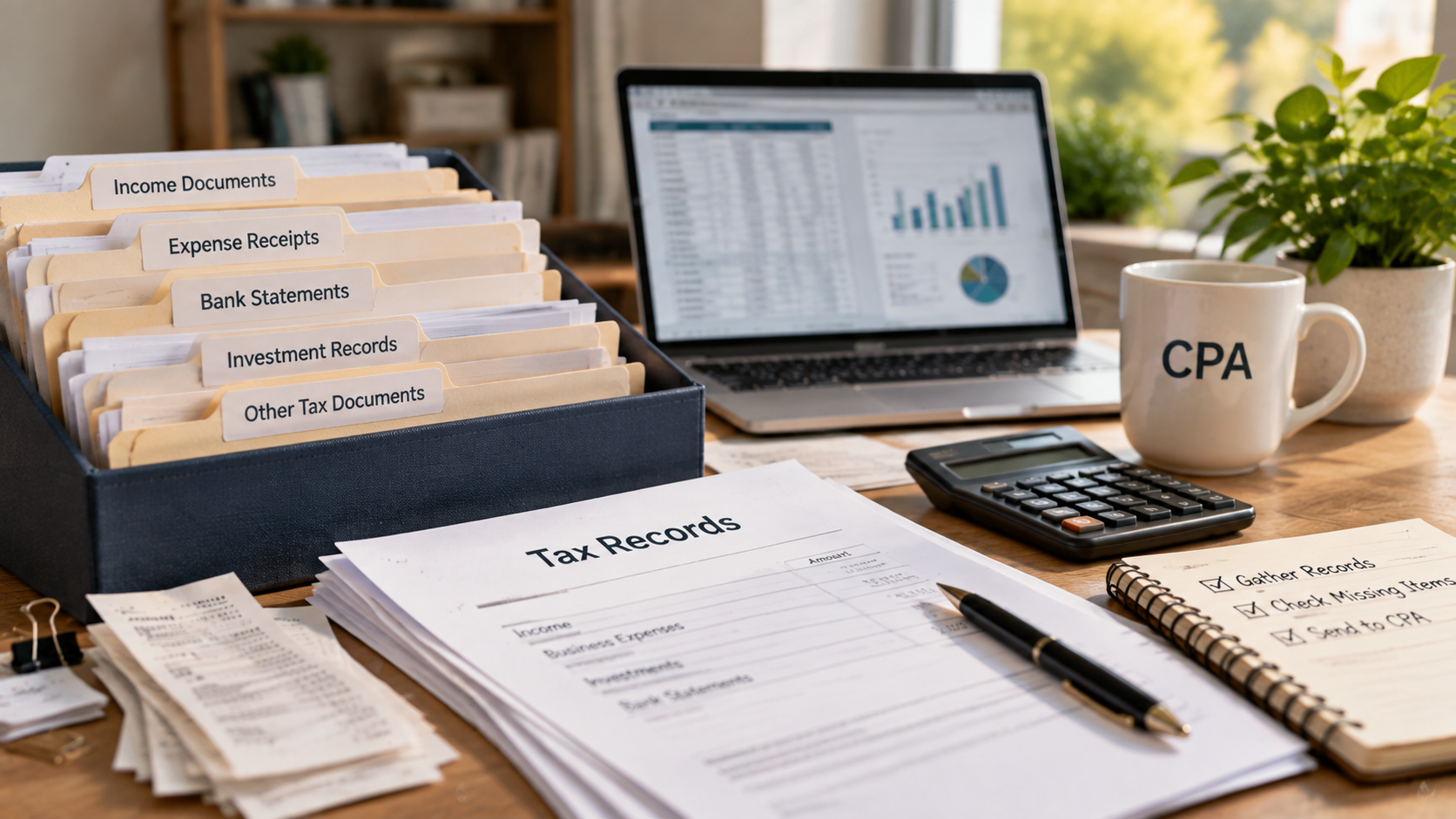
If you are wondering when you can give your tax records to a CPA, you can generally provide them as soon as the relevant tax documents are available and your records are organized. Sending them early gives your tax professional more time to review your information, identify anything missing, and address questions before the filing deadline.
A well-organized start can make tax preparation much easier and less stressful. With Reckenen, you can keep your tax records organized, follow a clear submission timeline, and stay prepared to provide additional information if your accountant needs it.
When to Provide Your Tax Records to a CPA
Send your tax records to a CPA once your important documents are available and organized. Providing them early gives your tax professional time to review your information, identify missing documents, and complete your tax preparation without last-minute stress.
Start Gathering Your Tax Documents Early
You do not need to wait until the tax deadline to send your records. Once your relevant documents are available, you can begin preparing them for your tax professional. Depending on your situation, these may include income statements, investment records, expense receipts, and other documents needed for your tax return.
Sending organized records early gives your tax preparer more time to:
- Review your tax information
- Identify missing documents
- Clarify questions about your income or expenses
- Request additional records if needed
- Prepare your return before the filing deadline
The goal is not to send incomplete or unorganized paperwork as quickly as possible. Instead, gather the records you have, organize them clearly, and provide them when they are ready for review.
Follow Your CPA’s Tax Preparation Timeline
Many CPA firms have their own deadlines for receiving client tax documents. These internal deadlines help give the firm enough time to review your records, follow up on missing information, and complete your tax preparation services before the official filing deadline.
If your CPA gives you a document submission date, try to follow it. If you are unsure when your records should be submitted, ask early rather than waiting until the filing deadline is approaching.
What If You Are Still Waiting for a Tax Document?
Sometimes, you may have most of your tax records ready but still be waiting for one or two important documents. In this situation, let your CPA know what you have received and what is still outstanding
Your tax professional can tell you whether they can begin reviewing the available records or need to wait for the remaining information. Keeping them informed can help prevent unnecessary delays in your tax filing.
Keep Your Tax Records Organized Before Submission
Before sending your records, take a few minutes to check that your documents are complete and easy to review. Clear file names, separate folders, and a simple list of missing documents can make it easier for your CPA to work through your information.
A little organization before submission can save time later and help make the overall CPA tax preparation process more efficient.
How Early Should You Share Tax Records?
You should start gathering your tax records as soon as the relevant documents become available. You do not need to wait until everything arrives at once.
- Gather documents as they become available.
- Organize your records in one place.
- Check for missing documents or information.
- Give your CPA enough time to review your records.
- Provide additional information when it becomes available.
Allow Time for Review and Missing Information
Sending your tax records early gives your CPA enough time to review the information and identify anything that may be incomplete. You may still be waiting for a tax document or need to provide additional details, so having extra time can make the process easier.
Early submission also allows more time to answer your CPA’s questions about income, transactions, or other records. You do not need every document months in advance, but it is helpful to avoid delaying the records you already have.
Avoid Waiting Until the Filing Deadline
Waiting until the filing deadline is close can make tax preparation more stressful. If your CPA finds missing information at the last minute, you may have limited time to provide the documents needed to complete your return.
For 2025 federal tax returns, the deadline for most calendar-year individual taxpayers was April 15, 2026. The IRS generally allows eligible taxpayers to request a six-month filing extension, but the extension does not extend the time to pay taxes owed.
When Should Tax Records Be Ready?
Your tax records should be ready once you have received the documents relevant to your return. You can:
- Start organizing documents as they arrive instead of waiting for everything.
- Use a tax documents checklist to track received and missing records.
- Keep a simple list of documents you are still waiting for.
- Tell your CPA if an important document will arrive later.
- Ask whether your available information is enough to begin tax preparation.
- Provide organized and reasonably complete records so your tax professional can move forward.
Can You Send Tax Records Before Tax Season Begins?
Yes, you can start preparing your tax records before tax season begins. One useful step is to review what documents you need for taxes and gather the records that are already available. Keep them organized in one place, and add new tax forms as they arrive instead of waiting until everything is available.
The IRS recommends gathering the documents needed for your return before preparing it, which can help support accurate filing and reduce errors. If your CPA accepts records early, follow the firm’s submission process and timeline. Preparing ahead can help you avoid last-minute work near the filing deadline.
How Does the Tax Filing Deadline Affect When You Send Records?
The tax filing deadline affects how much time your CPA has to review your records, ask questions, prepare your return, and complete the filing process. Eligible taxpayers can generally request an automatic filing extension, but an extension to file does not extend the deadline for paying taxes owed.
Even if you plan to request an extension, it is still helpful to provide your tax records early. Your CPA may need additional information or time to review your records before completing your return. Starting early gives you more time to handle these issues without last-minute
A Simple Timeline for Sending Tax Records
A practical timeline can help you understand how the process may work:
- As documents become available: Gather and organize your tax records.
- After gathering the main records: Check whether important information is missing.
- Before your CPA’s requested deadline: Submit the available records according to the firm’s instructions.
- During the review: Respond promptly if your tax professional requests clarification or additional information.
- Before the filing deadline: Make sure outstanding issues are addressed and understand whether your return is ready to file or an extension is needed.
The exact timing can vary from one taxpayer to another, but the basic principle remains the same: do not wait for the government filing deadline to begin the process of giving your CPA your records.
Can Sending Tax Records Late Delay Your Tax Return?
Check with your CPA early if you are unsure when to send your tax records, especially if documents are arriving at different times or something is missing. Your CPA can explain the preferred submission timeline, whether to send records together or as they become available, and how delays may affect your tax preparation.
It is also useful to contact your accountant if:
- You are still waiting for an important tax document.
- You are unsure whether a particular record is needed.
- Your tax records are incomplete.
- You are approaching the filing deadline.
- You know you will not meet the requested submission date.
- You believe you may need an extension.
Asking these questions early can prevent confusion later. It also gives your tax preparer a clearer understanding of your situation and allows the preparation process to be planned around the information that is actually available. Understanding of your situation and allows the preparation process to be planned around the information that is actually available.
FAQs:
1. When can I give my tax records to a CPA?
You can generally give your tax records to a CPA once the relevant documents are available and organized for review. You should also follow any submission deadline or instructions provided by your tax professional.
2. How early should I send my tax records to a CPA?
It is generally better to start as soon as the necessary records become available rather than waiting until the filing deadline is close. Early submission leaves more time to address missing documents and questions with your accountant.
3. Can I give my CPA tax records before tax season?
Yes. You can begin organizing and, if your tax professional accepts early submissions, providing available tax records before the main tax season. Some documents may not be available yet, so you may need to provide additional records later.
4. Can late tax records delay my tax return?
Late records can leave less time for your accountant to review the information, request missing documents, and resolve questions before the filing deadline. If you expect a delay, contact your CPA as early as possible.
5. Does a tax filing extension mean I can wait longer to give my CPA my records?
Not necessarily. An extension gives eligible taxpayers additional time to file, but it does not automatically mean you should delay sending your records. The IRS also states that an extension to file does not extend the deadline for paying taxes owed.
Keeping Your Tax Preparation on Track
You can generally give your tax records to a CPA once the relevant documents are available and reasonably organized. Sending them early gives your tax professional more time to review the information, request anything missing, and address questions before the filing deadline. Follow your accountant’s preferred submission timeline, and if you expect a delay, contact them as early as possible.
Need help keeping your tax preparation on track? Contact Reckenen to get guidance on organizing and submitting your tax records on time.