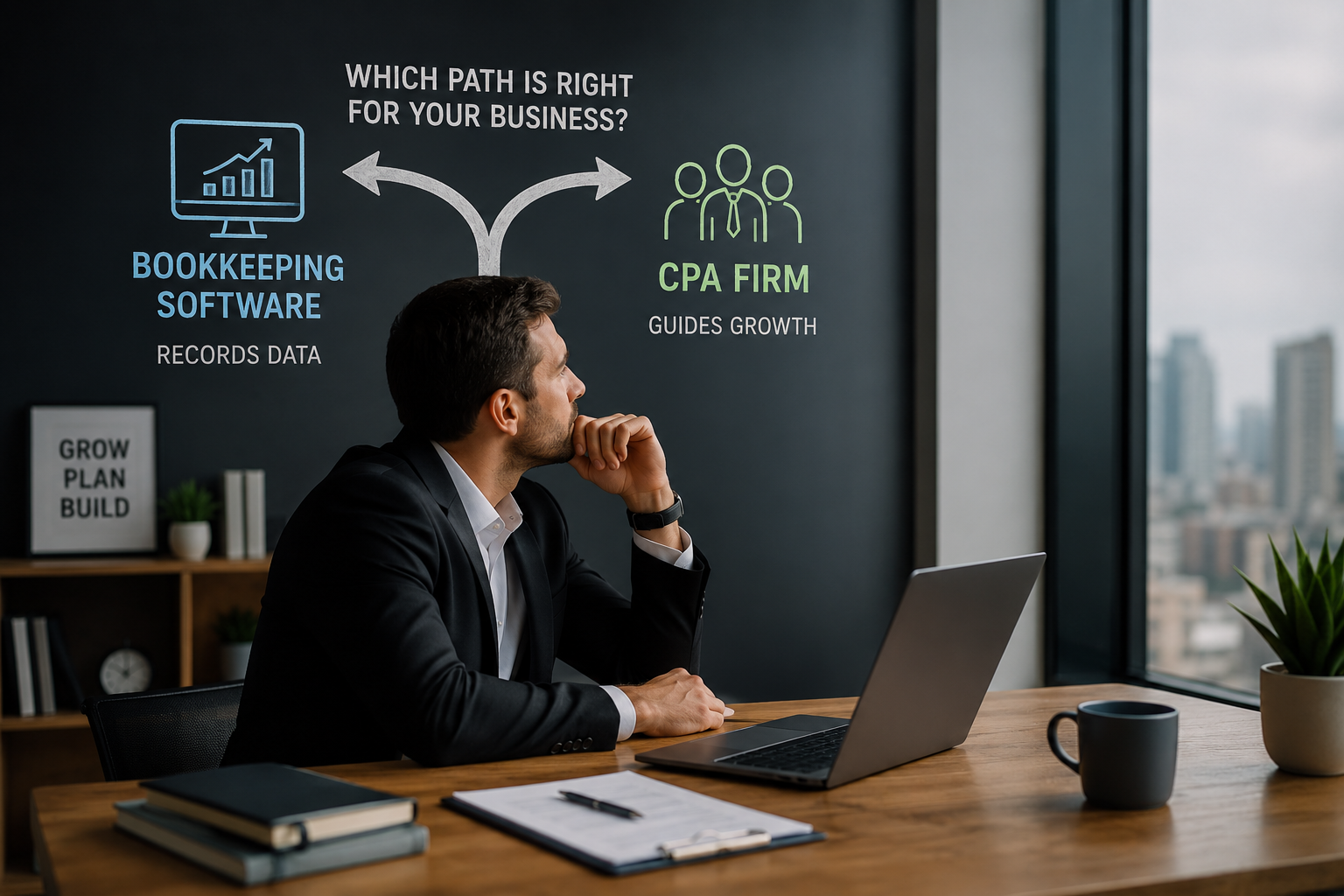
Most businesses start with bookkeeping software because it is affordable, easy to use, and effective for managing daily financial tasks. However, a business should consider switching to a CPA firm when its finances become more complex, tax responsibilities increase, or strategic financial guidance is needed. While software can track transactions and generate reports, it cannot provide the expert advice required to support business growth, reduce tax liability, and navigate important financial decisions.
As a company expands, challenges such as cash flow management, tax planning, compliance requirements, and long-term financial strategy become more important. This is where professional CPA services can make a significant difference. Drawing on insights inspired by Reckenen, this guide explains the key signs that indicate it may be time to move beyond bookkeeping software and invest in expert accounting support.
What is Bookkeeping Software?
Bookkeeping software is a digital tool that helps businesses record and organize financial transactions automatically.
It usually includes:
- Income and expense tracking
- Invoice generation
- Basic financial reports
- Bank transaction syncing
- Simple bookkeeping automation
In simple words, bookkeeping software helps you record financial data, but it does not guide financial decisions.
What is a CPA Firm?
A CPA (Certified Public Accountant) firm provides professional accounting, tax, and financial advisory services.
A CPA firm can help with:
- Tax planning and tax filing
- Financial analysis and reporting
- Business strategy and advisory
- Audit support and compliance
- Profit optimization
In simple words, a CPA firm does not just record money — it helps you manage and grow it strategically.
10 Signs You Should Switch to a CPA Firm
As your business grows, your financial responsibilities become more complex. While bookkeeping software can handle basic record-keeping, there comes a point when professional accounting support becomes necessary. Here are ten signs that it may be time to switch to a CPA firm.
1. Your Revenue Is Growing Rapidly
As your business generates more revenue, financial management becomes more complicated. Higher income often means more transactions, additional tax obligations, and greater reporting requirements. A CPA can help ensure your finances remain organized while identifying opportunities to improve profitability and tax efficiency.
2. You’re Paying More Taxes Than Expected
If your tax bill seems higher every year, it may be a sign that you’re missing deductions, credits, or tax-saving strategies. While bookkeeping software records financial data, a CPA can analyze your situation and help reduce your tax burden through proactive planning.
3. You Need Financial Strategy, Not Just Reports
Bookkeeping software can generate reports, but it cannot explain how to use that information to grow your business. A CPA can interpret financial data, identify trends, and provide strategic recommendations that support smarter business decisions.
4. Your Financial Records Contain Errors
Small bookkeeping mistakes can lead to inaccurate reports, compliance issues, and costly financial decisions. If you frequently find errors, missing transactions, or outdated records, a CPA can help improve accuracy and maintain reliable financial information.
5. Cash Flow Has Become Difficult to Manage
Strong cash flow is essential for daily operations and long-term growth. If you’re struggling to balance expenses, monitor profitability, or predict future cash needs, a CPA can help create a more effective financial management strategy.
6. Tax Season Feels Stressful Every Year
When tax season becomes overwhelming, it often indicates that your financial processes need additional support. A CPA can help organize records, identify tax-saving opportunities, and ensure filings are completed accurately and on time.
7. You Are Planning to Hire Employees
Hiring employees introduces payroll management, tax withholdings, benefits, and compliance requirements. As these responsibilities grow, a CPA can help ensure your business meets legal obligations while maintaining accurate financial records.
8. Your Business Is Preparing to Scale
Whether you’re expanding into new markets, opening additional locations, or launching new services, growth creates new financial challenges. A CPA can provide guidance on budgeting, forecasting, and financial planning to support sustainable expansion.
9. You Need Funding or Investment
Banks, lenders, and investors often require detailed financial statements before providing funding. A CPA can prepare accurate reports, improve financial transparency, and help present your business more professionally during the funding process.
10. Your Business Operations Are Becoming More Complex
As businesses grow, they often develop multiple revenue streams, additional tax obligations, and more detailed reporting requirements. If your bookkeeping software can no longer keep up with this complexity, a CPA can provide the expertise needed to manage finances more effectively.
The more complex your business becomes, the more valuable professional CPA guidance becomes for maintaining financial stability, supporting growth, and making informed business decisions.
When Bookkeeping Software is Not Enough
Bookkeeping software is useful in the early stage, but it has limitations.
It cannot:
- Provide tax-saving strategies
- Offer legal financial advice
- Help with business planning
- Optimize profits or expenses
- Support complex financial decisions
It only records what happens it does not improve what happens.
Cost vs Value: Is a CPA Worth It?
While bookkeeping software is usually cheaper, it only helps manage financial records. A CPA firm provides expert guidance that can help reduce taxes legally, prevent costly mistakes, improve financial planning, and support business growth.
Although hiring a CPA involves a higher upfront cost, the long-term savings and strategic value often make it a worthwhile investment for growing businesses.
Best Time to Switch to a CPA Firm
Timing plays a key role when deciding to move from bookkeeping software to a CPA firm. While every business is different, certain stages of growth often indicate that professional accounting support can provide greater value and help prevent future financial challenges.
After Tax Season
Many businesses choose to switch shortly after tax season because financial records are already organized and up to date. This timing allows a CPA to review the previous year’s performance and start planning strategies for the upcoming year without the pressure of filing deadlines.
When Your Business Starts Growing Rapidly
Rapid growth often brings more transactions, higher revenue, and additional financial responsibilities. If your business is expanding faster than your current system can handle, a CPA can help create processes that support sustainable growth while maintaining financial accuracy.
Before Major Expansion or Hiring
If you plan to hire employees, open a new location, launch new services, or enter new markets, it is often wise to bring in a CPA beforehand. Early guidance can help you make informed financial decisions and avoid costly mistakes during the expansion process.
When Financial Complexity Increases
As businesses grow, they may deal with multiple revenue streams, more tax obligations, inventory management, or complex reporting requirements. When financial management starts taking too much time or creating uncertainty, it is usually a sign that professional CPA support is needed.
The Earlier, the Better
Many business owners wait until they face a financial problem before seeking professional help. However, the best time to switch is often before challenges arise. A proactive approach allows a CPA to help improve financial planning, reduce risks, and support long-term business success.
How to Switch Smoothly
Switching from software to a CPA firm should be done carefully.
Start by organizing your financial records and exporting data from your bookkeeping system. Then consult a CPA firm to understand your business needs. After that, ensure proper transition of records so that there is no disruption in financial reporting or tax filing.
FAQs:
1. How do I know it’s the right time to switch from bookkeeping software to a CPA?
You should consider switching when your business finances become harder to manage, taxes increase, or you need expert advice for growth instead of just basic record-keeping.
2. Do small businesses really need a CPA firm?
Not always at the start, but as soon as your revenue grows or financial complexity increases, a CPA becomes very helpful for tax planning and business decisions.
3. What problems happen if I rely only on bookkeeping software?
Software alone can lead to missed tax savings, limited financial insight, and lack of strategic planning, especially as your business grows.
4. Can a CPA help reduce my business taxes legally?
Yes, a CPA can identify legal deductions, credits, and strategies that help reduce your overall tax burden while staying compliant.
5. Should I use both bookkeeping software and a CPA together?
Yes, many growing businesses use both—software for daily tracking and a CPA for strategy, taxes, and financial planning.
From Record-Keeping to Strategic Growth
Bookkeeping software and CPA firms both play important roles, but they are not the same. Software is useful for recording financial data in early stages, while CPA firms provide expert guidance for growth and tax optimization. The real difference comes down to timing. Early-stage businesses can rely on software, but growing businesses need CPA support to avoid financial mistakes and improve long-term profitability.
Ready to make the switch with confidence? Reckenen can help you gain the financial clarity and expert guidance needed to support your business growth.