Why Every Business Decision Needs CFO-Level Financial Insight

CFO-Level Financial Insight

This is where CFO-level financial insight becomes important. It helps business owners use financial data to make smart and safe decisions. Firms like Sherrin and Associates and other providers offering consultancy & tax services help businesses move from guesswork to structured financial planning.

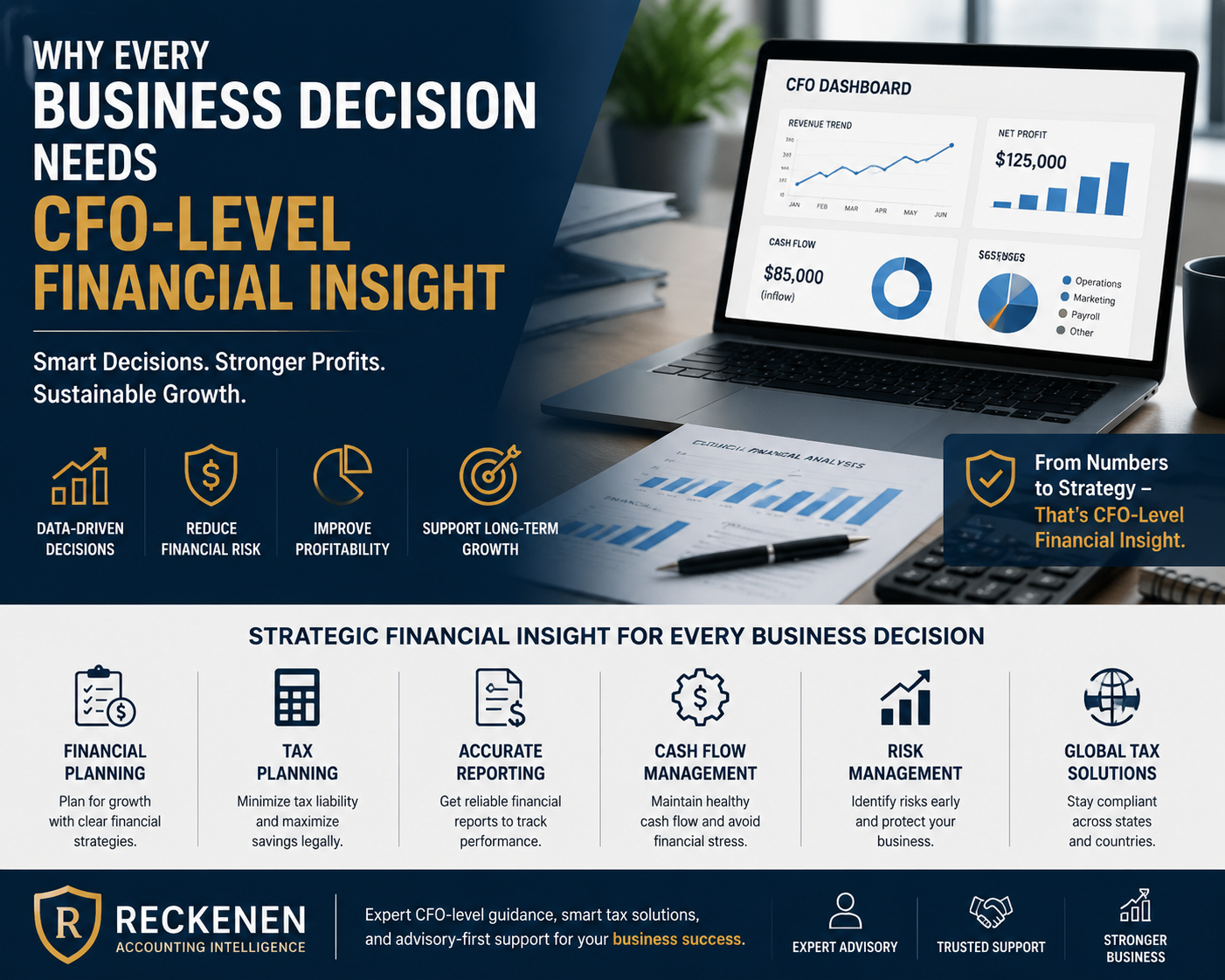
Most business decisions fail not because of hard work, but because they are made without real financial insight. This topic explains why CFO-level financial understanding is essential to turn everyday business choices into smart, data-driven decisions that improve profit, reduce risk, and support long-term growth, as emphasised by Reckenen through its advisory-first tax and accounting approach. 

What is CFO-level financial insight?

CFO-level financial insight means thinking and making business decisions like a chief financial officer instead of just looking at basic accounting numbers. In simple words, CFO-level financial insight is the ability to understand your business finances deeply so you can

  • Plan future growth
  • Control cash flow
  • Reduce financial risks
  • Improve profitability
  • Make smart, data-driven decisions

It goes beyond bookkeeping. Bookkeeping tells you what already happened, while CFO-level insight helps you decide what should happen next for a stronger and more successful business.

Business Decisions Without Financial Insight

Many small businesses make decisions based on guesswork instead of real financial data. They look at what “feels right” instead of what the numbers show. This approach often leads to cash flow problems, unnecessary tax payments, and slow or unstable business growth.

For example, a business may hire new staff when sales look good but later struggle to pay salaries because expenses were not properly planned.

What is Tax Planning? (Tax Planning Definition)

Tax planning is an important part of financial management for every business.

Tax planning definition: 

The process of organising finances in a legal way to reduce tax liability and improve financial efficiency. In simple words, it means planning your money smartly so you only pay the taxes you are required to pay, not more.

Define tax planning: 

It is the strategic arrangement of income, expenses, and investments to minimise taxes legally while staying compliant with tax laws. Modern firms also use new tax solutions to improve efficiency and reduce tax burden while staying compliant.

What Does Tax Planning Include?

Tax planning is not a one-time activity. It is a year-round process.

Tax planning includes the following:

  • Income structuring
  • Expense optimization
  • Investment planning
  • Retirement and business deductions
  • Year-end tax forecasting

In simple terms, tax planning includes proactive financial decisions made throughout the year, not just filing tax returns once a year. Many businesses also rely on experts offering global tax filing services when operating in multiple regions or countries.

Why CFO-Level Insight is Important in Tax & Accounting

CFO-level thinking improves how a business manages taxes and accounting by bringing clarity and strategy to financial decisions. It helps in finding tax-saving opportunities early, avoiding financial mistakes before they become bigger problems, making smarter investment decisions, and staying fully compliant with tax laws.

For example, buying equipment before year-end may reduce taxable income. This is part of smart, focused tax solutions used by professional advisors.

Business Problems Without CFO-Level Guidance

Without proper financial insight, businesses often face:

  • Poor cash flow management
  • Missed tax deductions
  • Delayed financial reporting
  • No clear growth direction
  • Reactive decision-making instead of planned strategy

Without structured planning, even profitable businesses can struggle financially.

Smart Financial Solutions for Growth

Modern businesses need more than basic accounting. They need structured financial systems that support real growth and better decision-making. Basic record-keeping is not enough when companies are trying to expand, manage costs, and stay competitive in a fast-changing market. 

This includes organised bookkeeping systems that keep financial records accurate and up-to-date and fractional CFO services that provide expert financial guidance without the cost of a full-time one. These solutions are often part of custom business & tax services designed for business growth and stability.

Focused Tax Solutions for Modern Businesses

Every business is different, so tax strategies must be customised.

Focused tax solutions include:

  • Business-specific tax planning
  • Industry-based strategies (healthcare, real estate, services, etc.)
  • Continuous tax monitoring throughout the year

This ensures businesses stay compliant and financially optimised.

Who Needs CFO-Level Financial Insight?

CFO-level financial insight is not only for large companies; it is essential for businesses of all sizes. It is especially important for small business owners who need better control over their finances, startups that are building their foundation, growing companies that want to scale safely, and service-based businesses.

CFO-level managers manage variable income and expenses, and high-revenue entrepreneurs require strong financial planning. Early financial control helps prevent long-term problems and supports stable, confident business growth.

Global & Multi-State Tax Challenges

Many businesses now operate in multiple states or countries. This creates challenges like:

  • Different tax rules in different locations
  • Complex reporting requirements
  • Higher risk of compliance errors

This is where global tax filing expertise becomes essential for smooth operations.

Why Businesses Choose Professional CPA Advisory

Businesses trust professional CPA advisory because it provides accurate financial reporting that keeps records clear and reliable. It also offers smart tax-saving strategies that help reduce tax burden legally and efficiently. 

Along with this, it improves decision-making support by giving business owners clear financial insights and ensures long-term financial stability through proper planning and control. Professional firms also follow structured approaches similar to Sherrin and Associates’ style advisory systems.

FAQs

  1. Does every company need a CFO?

Not every company needs a full-time CFO, but every growing business needs CFO-level financial insight to make better decisions. Many small businesses use advisory or fractional CFO support instead.

  1. What are the 5 P’s of finance?

The 5 P’s of finance are planning, profit, performance, protection, and prudence. These principles help businesses manage money and ensure long-term stability.

  1. What are the roles of the CFO and financial management in decision-making?

A CFO and financial management team analyse data to guide smart business decisions and control risks. They ensure every decision is based on accurate financial information.

  1. Why is financial analysis important for decision-making?

Financial analysis helps businesses understand their real performance through profits, cash flow, and expenses. It supports safe, informed, and effective decision-making.

  1. How does CFO-level insight help business growth?

CFO-level insight improves planning, reduces risks, and increases profitability. It turns financial data into clear strategies that support long-term business growth.

Financial Insight Drives Smarter Decisions

CFO-level financial insight is not just for big corporations. It is essential for every growing business. When combined with proper tax planning and accounting, it builds a strong financial foundation. Better financial insight, better business. decisions. Businesses that use structured new tax solutions and proper financial advice always perform better than those relying on guesswork.

Get expert CFO-level financial insight with Reckenen to make smarter business decisions.

Share insights

Email
Facebook
X
LinkedIn

Professional tax return preparation helps reduce filing errors by ensuring that all financial information is accurate, complete, and properly reviewed before submission. Tax professionals check income, deductions, and documents carefully, which reduces mistakes like wrong calculations or missing details.

They also stay updated with tax laws and use the correct forms and filing status. This lowers the risk of penalties, delays, and IRS issues, making the entire tax filing process more accurate and stress-free with Reckenen. 

What is Tax Return Preparation?

Tax return preparation is the process of collecting financial information and filing it with the tax authorities in an accurate and legal way. It includes reporting income, claiming deductions and credits, calculating taxes owed or refunds, and submitting the required forms to the IRS or relevant tax department.

In simple words, tax return preparation means organizing your financial details and filing your taxes correctly so you pay the right amount and avoid penalties or errors. A proper tax due diligence list is often used by professionals to ensure nothing is missed.

Why Tax Filing Errors Matter

Filing taxes may look simple, but even a small mistake can cause serious problems. Errors can lead to penalties, delayed refunds, or even IRS audits. Many people think they can manage it alone, but tax rules are complex and change often.

Most common tax mistakes happen because of missing details or wrong calculations. This is why professional tax return preparation is important. It helps reduce errors, ensures accuracy, and keeps everything compliant with tax laws. 

Why Professional Tax Preparation Matters

Tax filing errors can create serious financial and legal problems. From penalties to audits, the risks are real and often avoidable.

Professional tax return preparation helps ensure accuracy, compliance, and better financial outcomes. It reduces stress, saves time, and protects taxpayers from costly mistakes. A tax expert can help handle complex filings more safely. In today’s complex tax environment, choosing professional support like a tax filing pro, for short, is not just helpful; it is a smart decision. 

Common Tax Filing Errors Taxpayers Make

Many taxpayers make similar mistakes without realizing it. These include reporting incorrect income, missing deductions or credits, making calculation errors, and choosing the wrong filing status. Some people also forget to attach required forms or make simple data entry mistakes while filing manually.

Even one small tax filing error can change the final tax amount and create issues with the IRS. 

Why Errors Happen in Self-Prepared Tax Returns

Self-prepared tax returns often contain mistakes because most people are not fully aware of tax laws. Rules change frequently, and it becomes difficult to keep up with updates.

Another major reason is misunderstanding deductions and credits. Many taxpayers either miss benefits they qualify for or claim them incorrectly. Poor record-keeping throughout the year also leads to confusion during filing. Some people rely too much on software or AI tools, but without proper knowledge, mistakes still happen when users try to get their own tax filing done without support.

How Professional Tax Preparers Reduce Filing Errors

  • Carefully review all financial data to ensure accuracy
  • Check that all documents are complete and correct
  • Verify every number to avoid calculation mistakes
  • Apply updated tax laws and correct deductions
  • Avoid outdated or incorrect filing practices
  • Review the entire return before submission to catch errors
  • Select the correct tax forms and filing status
  • Ensure proper income reporting and classification.

Professionals also follow a structured tax due diligence list to ensure accuracy at every step. 

Role of Due Diligence in Tax Preparation

Due diligence means carefully checking all tax information before filing. It is an important part of professional tax preparation.

Tax experts verify income details, review deductions, and ensure that all claims are accurate. This process reduces the chances of errors and helps maintain compliance with tax regulations. It also lowers the risk of penalties and builds confidence in the final return.

How Professional Tax Preparation Helps Avoid IRS Penalties

IRS penalties usually happen when there are errors in reporting or missing information. Professional tax preparation helps avoid these problems by ensuring everything is correct before submission.

It prevents incorrect deductions, reduces the chances of underreporting income, and ensures that tax returns are filed on time. Proper documentation is also maintained, which is very important in case of an audit. This reduces stress and protects taxpayers from unnecessary financial loss.

Benefits of Using Professional Tax Services

  • Higher accuracy in tax returns, reducing the risk of penalties
  • Saves time by handling complex calculations and paperwork
  • Identifies tax-saving opportunities that are often missed
  • Ensures proper compliance with tax laws
  • Provides peace of mind during tax season

When You Should Not Rely Only on DIY or AI Tools

DIY tools may work for simple tax situations, but they are not always reliable for complex cases. If you have business income, multiple income sources, investments, or rental properties, professional help becomes necessary.

Major financial changes during the year can also make tax filing more complicated. In such cases, relying only on software or AI tools increases the risk of tax filing errors. When accuracy and compliance are important, professional support is the better choice.

Professional vs DIY Tax Filing Comparison

DIY tax filing may seem cost-effective, but it comes with higher risk. Many people miss deductions or make mistakes that cost them more in the long run.

Professional tax preparation, on the other hand, follows a structured process. Experts review every detail and ensure compliance with tax laws. This leads to better accuracy and reduces the chances of audits. In simple terms, DIY saves money upfront, but professional services like a tax filing pro for short save money in the long run. 

FAQs

  1. Why should I use a professional tax preparer?

A professional tax preparer helps ensure your tax return is accurate and complete. They also help you avoid errors, reduce penalties, and find possible tax savings.

  1. What process do professionals use to ensure accuracy?

They review all financial documents, cross-check data, apply updated tax laws, and verify calculations before filing. This step-by-step process reduces mistakes.

  1. What are the cons of using a professional tax preparer?

The main drawback is the cost of the service. However, this cost is often lower than the penalties or losses caused by filing errors.

  1. Are tax preparers responsible for mistakes?

Tax preparers are responsible for the work they do, but the taxpayer is also legally responsible for the final return. That is why choosing a qualified professional is important.

  1. When should I hire a professional tax preparer?

You should consider hiring one if you have complex finances or want to reduce tax filing errors and ensure full compliance. 

File Smart, Stay Safe 

Tax mistakes can cost more than you think, but they are avoidable. Professional tax return preparation brings accuracy, compliance, and peace of mind by catching errors before they become problems. Instead of risking penalties or delays, you get a smooth, reliable filing process. In simple terms, working with a professional is not just about filing taxes; it’s about protecting your money, your time, and your financial future.

Avoid costly mistakes; trust Reckenen to get your taxes right the first time.