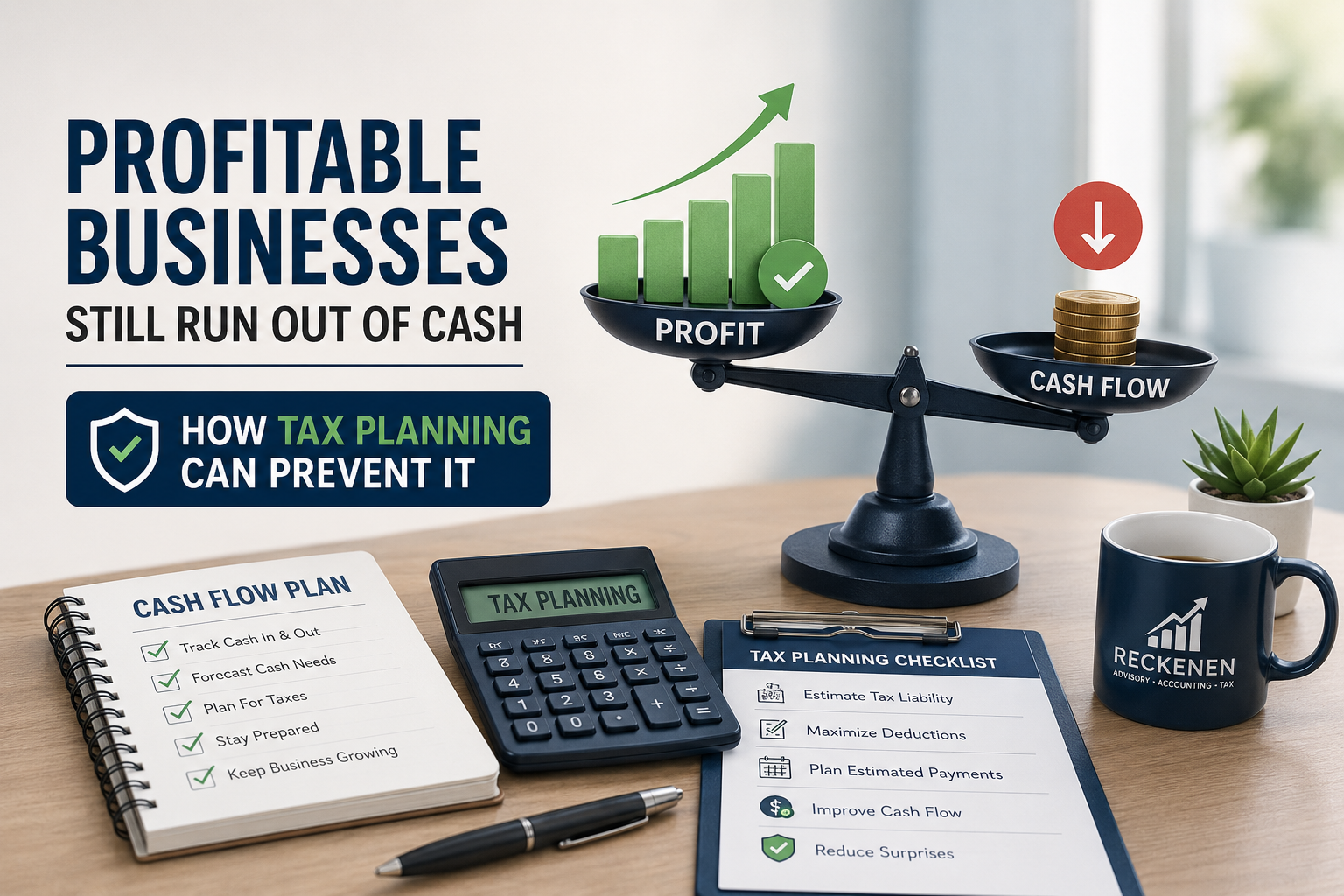
Your business is generating sales, revenue is growing, and profits look strong on paper. Yet, your bank account keeps shrinking. If this sounds familiar, you are not alone. Many business owners assume profit and cash are the same, but they are very different. A company can be profitable and still struggle to cover daily expenses, payroll, taxes, or vendor payments.
The good news is that most cash flow issues can be avoided with proper financial planning. Accurate bookkeeping, proactive tax planning, and regular financial reviews help businesses stay prepared and maintain healthy cash flow. At Reckenen, we help business owners understand their finances, plan for taxes, and make smarter decisions for long-term financial stability. In this guide, we’ll explain why profitable businesses run out of cash and how strategic tax planning can help prevent it.
Understanding the Difference Between Profit and Cash Flow
Before solving cash flow problems, it is important to understand the difference between profit and cash flow.
- Profit is the amount of money left after expenses are deducted from revenue. It appears on your income statement and measures how well your business performs financially over a specific period.
- Cash flow, on the other hand, refers to the actual movement of money into and out of your business. It shows how much cash is available to pay bills, employees, suppliers, loan payments, and taxes.
For example, a construction company may complete a large project and record a profit. However, if the client takes 90 days to pay the invoice, the business may not have enough cash available to cover payroll or operating expenses during that period.
Similarly, an e-commerce company may experience strong sales during a busy season. However, if it spends heavily on inventory before receiving customer payments, cash reserves can quickly shrink. Therefore, profitability does not always guarantee liquidity. While profit measures performance, cash flow determines whether a business can meet its financial obligations.
Why Profitable Businesses Still Run Out of Cash
Several factors can create a gap between profit and available cash. Understanding these issues is the first step toward preventing cash flow shortages.
Reason #1: Customers Have Not Paid Yet
Many businesses operate on credit terms. As a result, revenue may be recorded immediately, even though customers have not yet paid.
When accounts receivable continue to grow, cash becomes tied up in unpaid invoices. Consequently, businesses may struggle to cover day-to-day expenses despite reporting strong profits.
Reason #2: Growth Consumes Cash
Growth often requires significant investment. Companies may hire employees, purchase equipment, increase inventory, or expand operations before additional revenue is collected.
While growth can increase profitability over time, it can also place significant pressure on cash flow in the short term.
Reason #3: Inventory Ties Up Cash
Inventory is necessary for many businesses. However, inventory purchases use cash long before products are sold.
As inventory levels increase, more money becomes locked inside products sitting on shelves or in warehouses. Therefore, businesses may experience cash shortages even during profitable periods.
Reason #4: Debt Payments Are Not Profit Expenses
Loan payments affect cash flow but do not always appear as expenses on profit statements.
As a result, a company may report healthy profits while a large portion of available cash goes toward principal loan repayments.
Reason #5: Equipment Purchases
Many businesses invest in equipment, vehicles, software, or machinery to support growth. While these purchases may benefit the business over time, they often require significant cash upfront.
As a result, available cash can decrease quickly even when the company remains profitable. Therefore, business owners should plan major purchases carefully and consider how they will affect short-term cash flow.
Reason #6: Owner Distributions
Small business owners sometimes withdraw money from the business for personal use. While owner distributions may be necessary, large or frequent withdrawals can create cash flow challenges.
Consequently, a business may appear profitable on paper while struggling to maintain enough cash for payroll, vendor payments, and operational expenses.
Reason #7: Poor Cash Flow Forecasting
Many businesses focus on historical financial results but fail to forecast future cash needs. As a result, upcoming expenses, tax payments, debt obligations, and seasonal fluctuations can create unexpected cash shortages.
Regular cash flow forecasting helps business owners anticipate future financial demands, identify potential gaps, and make informed decisions before cash flow problems develop.
Large Tax Obligations
Taxes are one of the most overlooked causes of cash flow problems.
Many business owners focus on revenue and operating expenses throughout the year. However, they fail to prepare for estimated tax payments, business income taxes, payroll taxes, or state tax obligations.
Consequently, a large tax bill can create a sudden cash shortage that disrupts operations and limits growth opportunities.
How Tax Planning Helps Protect Cash Flow
Tax planning is more than preparing tax returns. Instead, it is an ongoing process that helps businesses manage cash flow while reducing unnecessary tax liabilities.
When business owners plan proactively, they gain greater visibility into future tax obligations and avoid unexpected financial surprises.
Improves Cash Flow Forecasting
Effective tax planning helps businesses estimate future tax payments throughout the year.
As a result, business owners can set aside funds in advance rather than scrambling to find cash when tax deadlines arrive.
Reduces Unexpected Tax Bills
Many tax liabilities develop gradually over time. However, they often remain unnoticed until tax season.
Through regular tax planning, businesses can identify potential liabilities early and make adjustments before they become costly problems.
Maximizes Available Deductions
Many companies miss valuable deductions because they do not review their tax strategy regularly.
A proactive approach helps businesses identify eligible deductions, credits, depreciation opportunities, and industry-specific tax benefits. Consequently, more cash remains inside the business.
Supports Better Financial Decisions
Tax planning works best when combined with accurate bookkeeping and financial reporting.
When business owners understand both their cash position and future tax obligations, they can make more informed decisions regarding hiring, expansion, investments, and financing.
Prevents Cash Flow Disruptions
Unexpected tax payments often force businesses to use emergency financing, delay investments, or reduce operating budgets.
However, strategic tax planning allows businesses to prepare in advance and maintain healthier cash reserves throughout the year.
Signs Your Business May Face a Cash Flow Problem
Even profitable businesses should watch for warning signs such as:
- Consistently low bank account balances
- Difficulty paying vendors on time
- Increasing accounts receivable balances
- Frequent reliance on credit lines
- Delayed payroll concerns
- Large unexpected tax bills
- Rapid revenue growth with declining cash reserves
If these issues appear regularly, your business may need stronger cash flow management and tax planning strategies.
FAQs:
Can seasonal businesses experience cash flow problems even when they are profitable?
Yes. Seasonal businesses often earn most of their revenue during specific times of the year. However, they must continue paying rent, payroll, insurance, and other expenses throughout the year. Therefore, careful cash flow planning is essential to cover costs during slower periods.
How often should a business review its cash flow position?
Most businesses should review cash flow monthly. However, companies experiencing rapid growth, seasonal fluctuations, or financial challenges may benefit from weekly reviews. Regular monitoring helps identify potential issues before they affect operations.
Does business structure affect cash flow and tax planning?
Yes. A company’s legal structure can influence tax obligations, owner compensation, and available tax strategies. As a result, reviewing your business structure periodically may uncover opportunities to improve both cash flow and tax efficiency.
Can technology help improve cash flow management?
Yes. Modern accounting software can automate invoicing, track expenses, monitor cash balances, and generate financial reports in real time. Consequently, business owners gain better visibility into their financial position and can make faster decisions.
When should a business seek professional financial advisory services?
Businesses should consider professional advisory support when cash flow becomes unpredictable, growth accelerates, tax obligations increase, or financial decisions become more complex. Early guidance often helps prevent costly mistakes and supports long-term financial stability.
The Bottom Line: Profit Alone Is Not Enough
Profit is important, but cash keeps a business running.
Many profitable businesses face financial stress because they focus only on revenue and profitability while overlooking cash flow management. Fortunately, proactive tax planning can help prevent many of the issues that lead to cash shortages. By understanding the difference between profit and cash flow, forecasting tax obligations, and reviewing financial performance regularly, businesses can strengthen their financial position and create a more stable path for growth.
Take control of your cash flow with expert tax planning and advisory services from Reckenen.